



Shining light on molecular machines

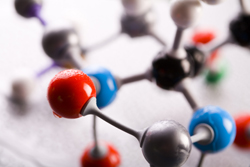
An exciting contemporary concept involves designing and building molecules with moving parts. Of particular interest are rotaxane molecules that can ultimately build up into ordered assemblies that function as nanoscopic machines capable of performing physical tasks. Without mimicking the complexity of the biological structures, these supramolecular systems could be forced to move past each other by external stimuli. Led by scientists at the University of Edinburgh, research within the MECHSOL project resulted in a new technique that enables macroscopic objects to move using rotaxane molecules as molecular motors. The basic idea behind these molecular machines was to rely on interlocking rotaxane molecules, which consist of two or more separate components, not connected by chemical but mechanical bonds. Natural molecular motors are usually driven by chemical energy and are believed to have high efficiency. The synthetic molecular motors designed by the MECHSOL project partners convert ultraviolet (UV) light energy into biased Brownian motion to transport a macroscopic cargo. The movement of a microlitre droplet of diiodomethane on a surface was achieved by exposing or concealing fluoroalkane residues and thereby modifying surface tension. Liquid transportation using similar photo-sensitive surfaces may provide for the delivery of analytes in lab-on-a-chip applications. Furthermore, chemical reactions could be performed in the near future by bringing individual drops containing the various reactants together without the use of reaction vessels.


