Study of gas hydrates under laboratory conditions

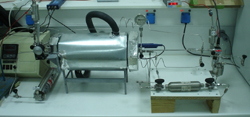
Gas hydrates are crystalline, ice-like compounds which contain trapped methane gas. They can be found throughout the world and are formed deep underwater at the site of the continental slope under conditions of very high pressure and low temperature. One such area is the Anaximander mountains, a submerged mountain range in the eastern Mediterranean Sea. The ANAXIMANDER project employed state-of-the-art instrumentation to sample sediments containing methane and to characterise gas hydrate sites. Scientists from the Technical University of Crete compared field data with laboratory-based experimental results as part of an investigation into the behaviour of gas hydrates. The team sought a greater understanding of the condition of gas hydrates and their rate of dissociation. The researchers developed an experimental device for studying the formation and dissociation of gas hydrates held in natural and artificial sediments. The device comprised a 15\;inch core holder and two piston vessels. The gas hydrates were confined in sediments in the core holder at a pore pressure of 20\;megapascals (MPa) and a confining stress of 2 megapascals (MPA). The temperature was carefully maintained with the aid of a cooling jacket and water bath. Preliminary studies were carried out in collaboration with Heriot Watt University, Scotland, into the mechanical behaviour of the natural sediment under different pressures. The findings were then related to the dissociation of gas hydrates within the sediment pores. The research team found that the dissociation of gas hydrates in the sediment pore space resulted in a change of pore pressure. The ANAXIMANDER project will enable the EU to become a leader in the field of gas hydrate research. The information gained can be used to evaluate their contribution to global warming and to investigate the possible use of gas hydrates as a future source of energy. The project will also help to develop European engineering expertise in deep sea and seafloor sampling and contribute to an environmental risk assessment for the eastern Mediterranean Sea.