Advanced backcross analysis to map milk production traits

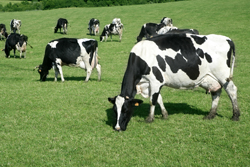
Researchers from Ludwig-Maximilians University of Munich introduced genetic material from Red Holstein (RH) founders into the gene pool of purebred Fleckvieh (FV) cattle. The aim was to incorporate favourable traits relating to milk yield and udder quality into the FV genome using the Advanced backcross quantitative trait loci (AB-QTL) strategy. Only the desired alleles of the RH genome were introgressed, leaving the remainder of the FV genome as intact as possible. The selected traits included milk yield (MY), and milk protein percentage (PP). The research team employed DNA marker strategies to detect the required QTL and to exclude unwanted alleles from becoming introgressed. A whole genome scan was performed for nine traits using eight half-sib families with an average size of 2,134 daughters. Following analysis, two families were excluded from further study because they displayed a high proportion of inconsistent results. The Bovmas scientists detected 22 QTL regions, most of which affected PP and MY simultaneously, but with a higher significance in one trait than in the other. The QTL affecting MY and PP were identified on chromosome 10 and was represented evidence of introgression from RH founders. There were also indications of introgressed QTL in four regions on other chromosomes. The positions of the QTL are estimates and can be further elucidated by fine and interval mapping together with marker assisted selection. A research strategy was planned in conjunction with Fleckvieh breeders' associations in Austria and Bavaria and artificial insemination centres.