When ships outsmart the seas

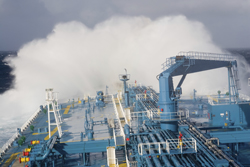
Rough seas have plagued sailors since antiquity, often posing a catastrophic threat to ship, crew and cargo. While ships have come a long way since the days of disastrous shipwrecks, the latest high-tech advances can help ensure maximum safety of sea vessels. One initiative in this respect was the EU-funded project 'Decision support system for ship operation in rough weather' (Handling WAVES) which designed onboard technology to help navigate through rough, wavy seas. The newly envisioned system sought to monitor ship acceleration in real time, estimate bow motions, assess shifting structural loads, calculate the probability of rogue waves and avert capsizing. The project's work started by investigating how rogue waves happen, how a ship loses stability and which particular motions lead to capsizing. It carried out tests for three months using three different ships (bulk carrier, ferry and container ship) and conducted numerous tests to measure structural loads, among many other factors. Intensive testing was undertaken to develop and apply methods to calculate the ships' responses to waves in order to develop the sophisticated electronic onboard system. The full onboard decision support system was finally completed, helping to improve ship performance and identify the best route to take. If the results of this project are fully exploited, the maritime sector will be safer and more dependable, positioning the EU as a leading authority on safety at sea.