Catching up with FreezeM: Redefining insect farming with innovative black soldier fly breeding tech

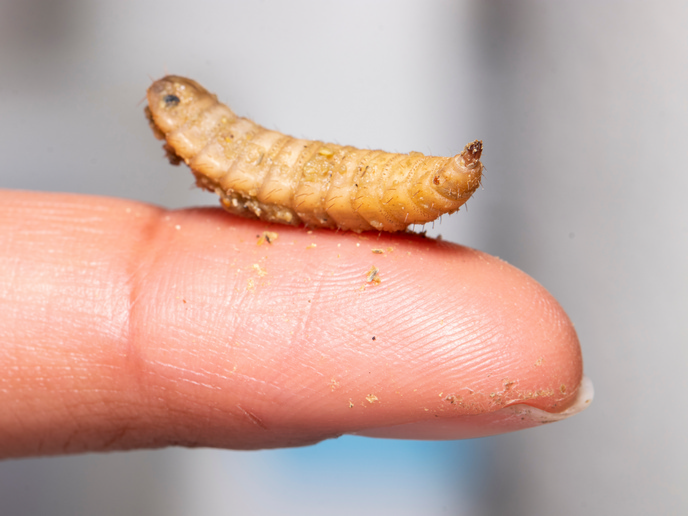
The FreezeM(opens in new window) project was launched in 2022 to revolutionise black soldier fly (BSF) breeding technologies. The overall goal was to make insect farming sustainable, scalable and accessible. It successfully cryopreserved BSF eggs and designed and operated a pilot neonate protein production line, demonstrating its ability to provide ready-to-use BSF eggs or neonates to insect farmers worldwide.
A novel breeding hub
Since the project’s end in 2024, the research team has transitioned to full industrial deployment, serving customers across Europe and the United Kingdom. “We established a subsidiary in Germany, where we now operate a first-of-its-kind pan-European BSF breeding hub,” comments Yuval Gilad, who is the co-founder and CEO of FreezeM Cryogenics Ltd, the Israeli company that coordinated the project. The hub is a joint collaboration between the subsidiary – FreezeM GmbH – and a local BSF company called Hermetia GmbH, which was the first to breed BSFs in Europe. “This facility represents a major milestone for the insect industry, being the first to implement a decoupled production model at commercial scale,” states Gilad. This decoupling, involving suspended animation of neonate larvae, makes it possible to separate the breeding from the rearing (larva growth and processing) steps in the production supply chain. It therefore allows the facility to produce a consistent, high-quality supply of life-suspended BSF neonates with an extended shelf life that currently reaches 21 days, with an over 90 % survival rate. The product, whose technology was developed from lab testing to commercial readiness during the FreezeM project, is marketed in ready-to-use packages under the brand name PauseM®. The fully operational hub now produces PauseM® at scale, supplying insect protein producers. This model has proven to be not only biologically effective but also logistically and economically efficient, reducing market barriers for new insect producers and promoting circular bioeconomy solutions for valorising organic waste streams. “It has made the insect-based circular economy more accessible to the EU market,” Gilad emphasises. The new German hub also serves as FreezeM’s European logistics and quality control centre, supporting expansion into new partnerships and pilot programmes with large feed and waste management companies. Describing the impact of EU support through the FreezeM (Revivable insect preservation technologies pausing the life cycle of insects at egg or neonate larvae stages for empowering the insect farming industry) project, Gilad concludes: “The funding was instrumental in taking our technology from the concept phase to commercialisation at scale. It significantly supported the development of our core technology, as well as all relevant go-to-market and scale-up activities.” The ‘Life After’ feature shines a light on finished EU-funded projects and what they have achieved since the end of EU funding. If you are interested in having your project featured as a ‘Life After’ project, please send us an email to editorial@cordis.europa.eu and tell us why!