What age says about holiday choices

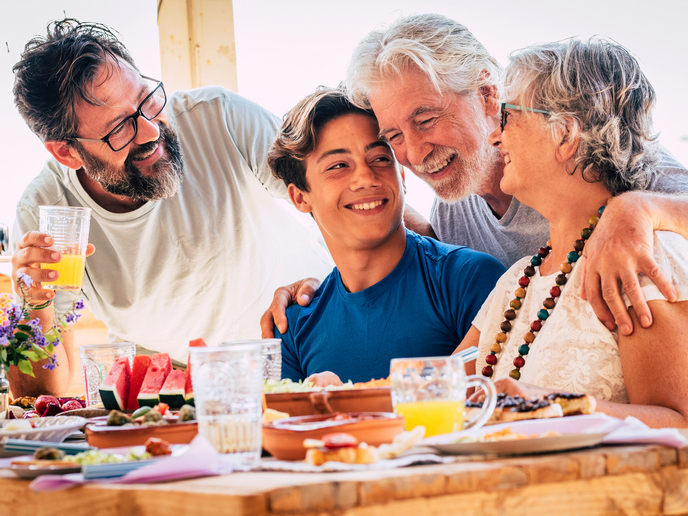
In today’s hyperconnected world, social media affects people’s travel plans. But how big or small is this influence if you’re young or elderly? To come up with an answer, an American research team grouped over 2 800 travellers into four generations spanning eight decades: baby boomers (born in the period 1946-1964), Gen X (1965-1980), millennials (1981-1996), and Gen Z (1997-2012).
The generational passport
By combining data from three separate studies between 2016 and 2021 that covered Cuba, France, Slovenia and the United States, they explored how these different generations feel about travel photos making them look cool or special, and how much that desire actually influences where they want to go on holiday. The findings were published in ‘Current Issues in Tourism’(opens in new window). Cuba and Slovenia were considered unconventional destinations because they get a lot fewer visitors than major global tourist spots such as France and the United States. The respondents rated how much they agreed that posting travel photos from a specific place would make them look cool, popular, unique or savvy online. They also rated the chances they would visit that place in the next year, five years and 10 years. The researchers then compared the scores across all four generations to see if the desire for online approval – and its effect on travel plans – differed by generation. “Whenever we post something on social media, we expect our peers to respond positively and give likes and comments to create some engagement to our posts,” explained corresponding author Sabrina Rahman, a recent PhD graduate from the University of Georgia, in a news item(opens in new window). “That expectation of getting positive feedback is what we call ‘social return,’ and we practice it in our everyday life without us knowing.”
Age before adventure?
Baby boomers generally reported the lowest social return scores of all the generations. Older travellers didn’t feel that posting travel photos would boost their social standing as much as younger generations did, and that difference directly shaped their travel plans. Millennials showed the strongest link between wanting online clout and actually wanting to visit unconventional places such as Cuba and Slovenia. For these two destinations, their travel plans were driven most by how impressive the trip would look online. Millennials weren’t simply trying to blend in, they wanted to stand out. Gen Z didn’t care about the hype. The results showed little connection between social clout and their desire to visit mainstream hotspots such as France. Gen Z preferred novelty. Surprisingly Gen X, and not millennials or Gen Z, showed the strongest link between social clout and visiting France and the United States. More and more, social media is playing a bigger role in how we plan and share our holidays. It doesn’t just provide travel ideas and tips, it actually helps decide where we choose to go. “It’s a relatively new phenomenon, but it’s very relevant given that about two-thirds of the world’s population are now social media users,” concluded Rahman. “People look into travel blogs, posts and reviews before travelling, so how appealing we find those destinations on social media shapes our travel intentions. And based on what kind of positive feedback I might get, that anticipation sometimes makes us visit some places or try a new restaurant.”