


More than just research needed for sustainability - Swedish Presidency
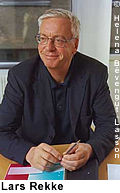
Only research combined with market reforms can guarantee sustainability in energy, according to the President of the industry and energy council, Lars Rekke, Swedish state secretary at the Ministry of industry, employment and communications. Speaking exclusively to CORDIS News following the conclusion of the council, Mr Rekke said that providing more focus for research in energy is vital to help improve sustainability. Better forms of production and transmission of energy are primary areas to investigate, said Mr Rekke, which falls mainly under the responsibility of the individual Member States. But the items debated at the industry and energy council will have a bearing on EU-funded research, according to Mr Rekke. 'Our discussions will have an impact on the Sixth Framework programme [FP6] - I consider that energy will be an important area in FP6.' The issue of sustainability and the environment has come strongly into focus during the Swedish Presidency of the European Union, as Sweden has been at the forefront of efforts to maximise the sustainability of its own energy resources. Mr Rekke pointed to the energy 'common market' that has existed in Scandinavia for decades as a good means of ensuring efficient use of energy. He also highlighted the country's high usage of hydroelectric power, a clean and sustainable source of energy. In addition, the Swedish government has started working together with the country's car manufacturers and with the oil industry to see how to decrease the threat to the environment from car fuel. 'This is not just a question of the fuels, it is also a question of the engines,' he added. The research has led to new innovative energy sources, but Mr Rekke concedes that one of the main problems with these at present is the costs. Low level use and high levels of innovative tools and techniques has meant that any breakthrough has not been cheap or easily accessible. 'This is one of the most important challenges - to allocate research and development funding to find ways to decrease costs for these fuels.' Customer pressure is a key in getting the market to follow, said Mr Rekke, who worked in the oil industry prior to becoming a politician. Speaking about the efforts made by the oil industry when it first started to investigate how to offer lead free petrol, he claimed that 'the customers were as important as the government when it came to research.' He accepts that everyone, including politicians, needs to play a role in raising awareness that will lead to these customer demands. He recommends that customers should not just ask about the direct effect of company products, but should also look at areas such as supplies to that company, and what effect they have. On the same day as the conclusion of the council meeting, May 15, Commission President, Romano Prodi was telling the European Parliament in Strasbourg that the Commission had adopted its proposal for an EU strategy for sustainable development, part of its preparations for the next World Summit. Part of this proposal includes a commitment to reducing greenhouse emissions by one per cent of their 1990 levels every year until 2020, more ambitious environmental targets for energy taxation, phasing out all subsidies for fossil fuel production and consumption, starting by 2010 and, by the same year, ensuring that alternative fuels account for at least seven per cent of the fuel consumed by cars and trucks. It also aims to ensure that by 2010 the share of road transport (related to rail, water and public transport) is no greater than in 1998.
Countries
Sweden