


Scientific Committee drives proposals to combat food-borne disease
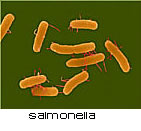
The European Commission has adopted measures to review current legislation on the prevention and control of food-borne disease in response to an opinion from the scientific committee on veterinary measures relating to public health (SCVPH). Health and Consumer Protection Commissioner David Byrne said: 'This is a major step in our campaign to improve food safety. The fact that many people suffer every year from food-borne illness, which can sometimes even prove fatal, does not appear to get major media attention.' The SCVPH published an opinion on the control of zoonoses (diseases or infections that are passed from animal to man) in April 2000, calling for tighter controls and improved monitoring to reverse the increasing incidence of zoonotic disease in recent decades. The two most common types of zoonosis in the EU are salmonella and campylobacter, of which 165.659 and 126.981 cases were reported in 1999, respectively. These figures are likely to represent just the tip of the iceberg, in view of the large number of cases that go unreported and the low incidence of laboratory diagnosis. The SCVPH report, which concentrates on seven of the main zoonotic agents, highlights a number of areas for concern. The committee states that in approximately five per cent of salmonella cases, a serious complication similar to reactive arthritis - sequellae - arises. Of these complicated cases, around two per cent (equivalent to one in every 1000 cases of salmonellosis) are fatal. The SCVPH estimated that this is equivalent to about 200 fatalities per year in the EU, and suggested that the increasing resistance of some strains of salmonella to antibiotics may aggravate the effects of the disease and increase the risk of sequellae or death. The SCVPH also estimated that in one in every 1000 cases of campylobacteriosis an acute neuromuscular paralysis disorder known as Guillain-Barré syndrome occurs. The committee also warned that listeriosis, although a less common infection than salmonella and campylobacter, may prove fatal in between 20 and 40 per cent of cases. In immuno-compromised individuals, the SCVPH said this figure could be as high as 75 per cent. The SCVPH opinion on zoonosis control also posited a number of areas where further research would be beneficial. These included the development of accurate diagnostic techniques to test for the presence of salmonella infection in live animals for use across the EU, and further research on the on-farm epidemiology of zoonotic infections. The committee also suggested that further research on the causes of campylobacteriosis infections and on the natural reservoirs of the disease could also give important clues to controlling the rate of human infection. The SCVPH's opinion triggered an EU-wide information-gathering project on the incidence of food-borne disease, with member states submitting national reports in March this year. The proposals adopted by the Commission include a new directive obliging member states to establish systems to monitor zoonotic agents throughout the food chain and to participate in co-ordinated monitoring programmes to record levels of zoonotic infection in the EU. The measures, which will be co-financed from the Community budget, also include the collection of data on food-borne disease outbreaks and the development of antimicrobial resistance in certain zoonotic agents. The proposed regulation also sets up the framework for the reduction of zoonotic infection at source, through a co-ordinated policy of pathogen reduction targeted at salmonella in particular. The future European Food Authority, an independent food safety body due to be in place by 2002, would be responsible for the monitoring of data relating to zoonosis control and prevention under the revised legislation.