


ESA spacecraft explore Earth's magnetic tail
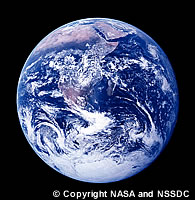
Four European Space Agency (ESA) craft have been exploring the Earth's magnetotail, that harbours the energy which causes the northern lights, in unprecedented detail. Since the end of August, the quartet of ESA Cluster spacecraft has been flying through the area of electrified gas created by the Earth's magnetic field - its 'tail' - in tetrahedral formation to obtain the first detailed, 3D view of the region. The Earth is continually bombarded by a blast of electronically-charged particles from the Sun. This movement creates a 'solar wind' that sweeps around the Earth's magnetic bubble, shaping it like giant windsock. The particles inside the earth's tail can pick up energy and be accelerated towards the planet's poles, creating the substorms that give rise to the northern and southern lights. Cluster scientist Philippe Escoubet said: 'Exactly what causes these substorms is still uncertain. Cluster will give us unique sets of data from 42 instruments that will help us to unravel what is happening in the magnetotail.' 'This is extremely important,' he added, 'because substorms can cause power blackouts and communication breakdowns on earth as well as beautiful auroras.' The spacecraft will stay in the tail until the end of October. It is hoped Cluster will be able to undertake a second mission to the region at the end of 2002.