


Byrne and Fischler call for political leadership on GMOs
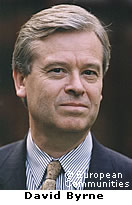
David Byrne, Commissioner for Health and consumer protection, and Franz Fischler, Commissioner for Agriculture, Rural Development and Fisheries, have called upon policy makers to show firm leadership on the issue of genetically modified organisms (GMOs). Speaking at the informal Agriculture Council in Alden Beisen, Belgium, on 18 September, Commissioner Fischler said: 'As the heated public debate in Europe shows, it is of utmost importance to respond to the concerns of our society. This is what the Commission did by proposing clear labelling [and] traceability and a sound science-based authorisation process. It is not my understanding of political leadership to echo populist stances and play on fears in order to score cheap political points.' Commissioner Byrne added: 'Very often the debate on GMOs has generated more heat than light. We must ensure, as political leaders, that the unbiased facts on biotechnology are placed before our citizens to see and understand. Too many false claims have been made which do not reflect [a] science-based approach to food and safety...Therefore I call on all sides to have a rational debate and to take a balanced approach.' He emphasised: 'A high level of protection, consumer choice and transparent, uniform and efficient authorisation procedures are key elements in fostering social acceptance and trust in the application of biotechnology to food and feed...In the minds of the European public, safety is the most important ingredient of their food. Compromising on food safety is not the way forward. The overarching principle of the existing and proposed Commission legislation on GMOs is that GM food and feed does not and must not present a risk for human health, animal health or the environment.' Mr Byrne's statements echo the hardline stance he took on GM issues at the presentation of Commission proposals for GM food and feed regulation at the European Parliament on 11 September. There he emphasised that it was not a question of providing consumers with information to make a choice about which GM substances were dangerous, but ensuring that 'if a food is unsafe it cannot be placed on the market. There is no question of allowing it on the market but warning the consumer about a potential hazard.' At the informal Agriculture Council, Commissioner Byrne also emphasised the potential benefits of biotechnology. 'Take the situation on rare diseases,' he explained. 'As most of them are caused by genetic disorders, the advances in gene technology will contribute very much to the understanding of the causes of these diseases and perhaps lead to cures.' He added: 'Life sciences and biotechnology are in a stage of exponential growth. They open up a vast range of potential in terms of future benefits, competitive advantage, economic growth and employment opportunities.' But Commissioner Byrne said that public support is essential to realising these benefits: 'The potential we are envisaging can only be realised if there is broad public support. We see an increasing need for awareness and enlightened policy decision based on rational fact.' The Commission's proposals for GM regulation include the introduction of a farm to fork labelling regime on GM foods and produce, the labelling of GM feed for the first time, and the independent authorisation of GM products by the proposed European Food Authority.