


Renewable energy research could help Europe's future energy problems - Busquin
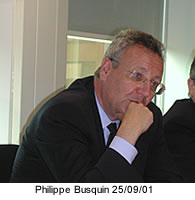
EU Research Commissioner Philippe Busquin has said that renewable energy research has an even greater importance following the recent US terrorist attacks and recent estimates of future increases in European energy dependency, but is confident that the Europe Union's Framework programmes and proposed European Research Area (ERA) will help progress in the area. Opening a conference on the 'Integration of renewable energy sources and distributed generation in energy systems' on 25 September, Commissioner Busquin outlined the need for further research on renewables: 'The dramatic events of late make questions of supply security, independence and energy accessibility even more pertinent for our continent.' Some 50 per cent of the EU's energy is imported, with 45 per cent of its oil imports coming from the Middle East. According to the estimations of the Green Paper on the European strategy for energy supply security, the energy dependence of the Union could reach 70 per cent by 2020-2030, a situation that could be further accentuated by the enlargement of the Union to candidate countries.' Commissioner Busquin said that the European Research Area was crucial to the decentralisation of national power networks and the integration of smaller, renewable energy producers into the EU energy market. He said that the networks of excellence and integrated projects around which the ERA will be structured are crucial for generating the critical mass and large-scale funding necessary to make real progress in this area. Renewable energies are abundantly available, clean and exploitable within the Union itself, according to Mr Busquin. 'The optimal integration of these new energy sources involves giving more space to decentralised production and adapting energy networks and systems to this end.' He said that the ERA would 'both support technological progress and promote [renewable energy] use, by reducing barriers...to the use of renewable energies and decentralised production.' Referring to the Commission's Green Paper 'Towards a European strategy for the security of energy supply,' which is designed to debate the security of energy supply in the EU, Mr Busquin added: 'One of the key messages of the Green Paper is that no one energy option has the capacity to provide, in the near future, for all our energy needs. We must therefore opt for diversity. This diversity must be found in the options chosen by political decision-makers and be reflected in research priorities.' Rolf Bierhoff, president of the electricity industry union Eurelectric agreed that energy diversification was essential, but expressed concern at the lack of specific funding for energy research in the programme for the Sixth Framework Programme (FP6). He said: 'We in Eurelectric are very concerned about the gaps in clear and specific funding for energy R&D in the Commission's proposal.' He explained that while the proposal did contain a thematic area on 'Sustainable development and global change,' 'it is unfortunately not clear from the text how the EU will address many of the energy research needs that are referred to in the Commission's Green Paper 'Towards a Strategy for the security of energy supply,' and also in the Commission's 'Final report of the European climate change programme.'' Mr Busquin replied that energy research had been given a clear role in FP6. He explained that the 'Sustainable development and global change' thematic programme encompassed both short and long term measures for energy research and the proposed short term actions aimed to demonstrate the use of new and renewable energies and ways of using energy efficiently. He added that work was also planned on the integration of renewable energy producers into existing power supply networks and the improvement of the competitiveness and reliability of the new production processes. Long term energy objectives proposed under FP6 include preparing the ground for development of energy sources and transformation to allow for less dependence on fossil fuels, particularly in transport, through the use of hydrogen technology and biomass (organic waste from agriculture and forestry) fuels. The EU has already made considerable progress in renewable energy, according to Mr Busquin. Europe currently accounts for 75 per cent of global wind energy production. Furthermore, the amount of wind energy power generated in Europe jumped by 27 per cent over the period 1999-2000. Technological research in the wind and photovoltaic (solar) energy sectors has already helped to cut costs and improve the efficiency of these means of power production. The EU objectives set out in a recent Directive on the promotion of electricity produced by renewable sources (adopted by the Council on 7 September) include increasing the proportion of renewable energies in the total EU energy consumption from 6 per cent, as it stands today, to 12 per cent by 2010. More specifically, the EU aims to increase electricity production from renewable sources from 14-22 per cent over the same period. To meet its commitments under the Kyoto protocol, the EU must reach an eight per cent cut in CO2 emissions by 2008-2012.