


EU schools embrace the Internet, but discrepancies remain
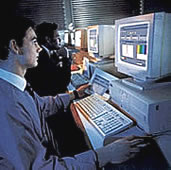
Use of the Internet in the EU's schools is growing, but discrepancies in the pace of take-up between the 15 Member States remain. This was one of the main conclusions drawn from the most recent Eurobarometer report of surveys on Internet in the classroom, the Commission announced on 11 October. The surveys were carried out between February and May 2001 as part of the eEurope action plan benchmarking initiative. Results show that teachers are embracing the Internet in the classroom across the EU, although with different degrees of enthusiasm. 'A key finding of the surveys is that the development of the Internet in schools seems to be a priority in all Member States,' said European Enterprise and Information Society Commissioner Erkki Liikanen. 'At the same time, the surveys send us a warning signal that considerable efforts are needed to ensure equal access to the Internet amongst the pupils of different Member States.' 'Another key finding of the surveys is that European teachers are overwhelmingly open towards the use of new technologies with their pupils,' added Viviane Reding, European Commissioner for Education, Culture and Audiovisual. 'Lower levels of Internet take-up in class in some Member States is due to lack of computers and Internet connections,' she explained. The survey produced some encouraging statistics regarding equipment: nine out of ten EU schools are now connected to the Internet and pupils have access to the Internet in eight out of ten EU schools. For every offline computer, there are 12 pupils in EU schools, and for every computer with an Internet connection, 24 pupils. Half of the computers used for education are less than three years old. More effort must be made if discrepancies between Member States are to be eliminated. At the moment, figures vary between 3 and 25 pupils per offline computer and 3 and 50 pupils per online computer in the different EU Member States. EU school technology is also still dominated by narrowband technologies, although high speed Internet has made breakthroughs in a few Member States, the survey shows.