


Commission accepts two thirds of Parliament's FP6 amendments
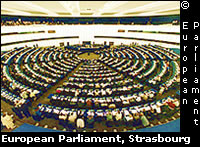
The Commission will accept 248 of the 334 amendments to its proposals on the Sixth Framework programme (FP6) for which the European Parliament voted on 14 November, according to Research Commissioner Philippe Busquin. The amendments focus predominantly on the content of the thematic priorities, but also reflect Parliament concerns about the structure of the Framework programme, the instruments, the budget and the question of ethics. Whilst Mr Busquin accepted two thirds of these amendments, he was reluctant to make any major changes to the funding of nuclear fusion research or to the budget of the eighth priority, which is designed to fund research into the EU's unfixed scientific and technological needs. On the structure of FP6, Mr Busquin agreed with the Parliament amendment recommending a single structure for the programme, saying that it would facilitate parliamentary scrutiny. He added that each one of the eight priorities would have its own distinct budget, over which Parliament will be able to exercise its budgetary control. Turning to the priorities, the Commissioner said that he agreed to reorganise the content of the priorities 'genomics and health', 'food safety' and 'sustainable development' in accordance with the Parliament's amendments. Priority one, genomics and health, will be extended to include research into all living organisms as well as genomes and medical research will be reinforced, especially cancer research, said Mr Busquin. For priority five, food safety, agricultural research into food security will be strengthened and in priority six, sustainable development, in addition to research into the environment, transport and energy, research into renewable energies will continue. Mr Busquin noted that the Commission will also take on board amendments concerning the involvement of candidate countries, research into security, the exclusion of weapons research and the importance of SMEs. Responding to the Parliament's amendments for the new instruments proposed for FP6, Mr Busquin said that the Commission 'largely accepts the spirit of the amendments'. He emphasised that the idea behind the new instruments, networks of excellence, integrated projects and programmes under Article 169, which will be introduced alongside existing instruments for a specified period of time, was for them to both become integrators and facilitate the substantial simplification of management procedures, for which the Framework programmes have in the past been criticised. The Commissioner said that French MEP Gérard Caudron's proposal of a 'stairway of excellence', which Mr Caudron has argued will improve the practical functioning of FP6 by enabling potential participants in research fields in their infancy to evolve into more advanced centres of excellence, will be 'applied with certain limits'. Mr Busquin thanked the Parliament for staying close to the Commission's proposal concerning the budget for FP6, which sees an increase in 17 per cent from FP5. He rejected however the 100 million euro extra requested by the Parliament. 'The increase of 100 million euro for the global envelope [for FP6 and Euratom] proposed by Parliament doesn't itself seem a considerable addition,' said Mr Busquin. 'But at the same time, this increase does not seem to us to be appropriate.' He went on to say that the Commission's figure was calculated according to needs and the financial provisions in the Treaty. On Euratom, Mr Busquin conceded that in the light of Parliament's vote, the financing of fusion research could be re-examined. Parliament would like to see an allocation of 1330 million euro for the Euratom programme, 100 million euro more than proposed by the Commission. Mr Busquin stressed to MEPs that the 200 million euro reserved for ITER, Europe's nuclear reactor, would be used for all activities relating to ITER, not just the construction of the machine. On the budget of the Commission's eighth thematic priority, 'anticipating the EU's scientific and technological needs', for which MEPs would like to see a reduction of 790 million euro, Mr Busquin emphasised that it is important not to go beyond real needs which can be anticipated, but also not to deprive researchers of the resources to meet the needs of the eighth priority. 'It relates in particular to research for reforming the common agricultural policy, to make use of the fisheries policy, for public health, for justice and security, subjects which cannot be dealt with suitably under the headings of the other priorities,' said Mr Busquin. Regarding ethics, Mr Busquin said the Commission would certainly exclude research into human cloning designed to alter the genetic heritage of human beings. Concluding his response to the Parliament's vote, Mr Busquin emphasised the importance of better coordinating national research programmes, and said that the management of the Framework programme must be simplified for the sake of small companies.