


Liikanen announces Grand prize IST winners
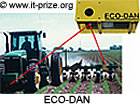
Three projects representing the best of Europe's information society innovation were awarded the IST grand prize by Enterprise and Information Society Commissioner Erkki Liikanen at the IST (information society technologies) conference in Düsseldorf, Germany on the evening of 3 December. The three awards of 200,000 euro went to projects which had succeeded in creating a development platform allowing users to create graphically three dimensional (3D) interactive content, an advanced tool control system and a computer aided, ultrasound based navigation system for improved brain surgery. Announcing the prizewinners, Mr Liikanen emphasised the importance of successfully exploiting products developed in Europe. 'If we can't create a link from research to the market, we lose potential. We need to look at how this can be done. The IST prize is one way of doing this,' he said. Bertrand Duplat from Virtools in France collected the prize for the development platform enabling the creation of 3D interactive content. Virtools' 'behaviour building blocks' can be used to create varying behaviour with Virtools' software development kit. No programming experience is required, so designers are able to free themselves from programming issues and instead focus on content. In addition to games, this technology can be used for eLearning and interactive shopping. Mr Duplat explained to CORDIS News that he thought his project was selected by the jury because it was 'there at the right time', referring to the recent rise of broadband. Virtools was founded in 1993 and currently has 40 employees. The company is looking to expand, and the 200,000 euro awarded through the IST prize will be put towards this, according to Mr Duplat. 'We already have plans for 2002 and two of the main items we are financing next year is to keep on developing more technologies {...} and to open offices in Europe,' he said. In addition to the financial advantages, Mr Duplat believes the award will also bring other benefits. 'I think it's going to be very valuable in terms of recognition and visibility, credibility - the fact that it was endorsed and chosen from so many and chosen by a prestigious jury. It will be important for partnerships and with the financial community,' he told CORDIS News. The prize for the advanced tool control system was awarded to Thorkil Dahlgreen from ECO-DAN in Denmark. ECO-DAN is an automated guidance system for controlling the alignment of various implements when working in row crops. It is precise in operation whilst permitting high working speeds. The technology can be used to reduce the use of pesticides by 75 per cent. It is based on computer vision, using digital colour cameras to continuously photograph plants and monitor a marker track. The computer converts these images into a reference line and checks the position of the implement in relation to this reference line. A signal is then sent to the hydraulic system if the implement needs realigning. 'We have developed a project based on information technology which is destined to change the way our food is produced in agriculture, Mr Dahlgreen told CORDIS News. On receiving the IST prize, he added 'we are already engaged in new product development, so this cheque of 200,000 euro is very welcome. It's a big honour,' he said. The third prize went to SonoWand, developed by MISON, a spin-off company from the Norwegian centre of excellence in Trondheim. The company was created in 1998 and now employs 13 people. The computer aided, ultrasound based navigation system offers high quality and precision, allowing a surgeon to remove a greater portion of a brain tumour through a smaller incision to the brain. Conventional navigating surgical instruments provide images that are several days old, and cannot be fully relied upon on the day of the operation. SonoWand enables the surgeon to easily update the map during surgery, taking only a few seconds to scan the brain. Åge Grønningsgåter, who collected the award on behalf of MISON, explained to CORDIS News that the prize money will be used to help introduce this new technology to the marketplace. 'We will use it for the market introduction phase. It is very important for us now to secure business, so this will be very valuable for us in the starting phase we're in now,' he said. He also cited a Norwegian company which won the IST award several years ago which received a lot of attention, and Mr Grønningsgåter hopes that his award will have the same effect. An award winner from last year, Lionel Zajde from VITEC Multemedia explained that this was exactly what had happened to his company. He said that the IST award had helped his company on four fronts: media coverage, Internet marketing, market recognition and funding. He believes that the prize is instrumental in securing funding from the European Commission as well as from banks, as they are assured that their money is being invested in viable technology. Commissioner Liikanen congratulated this year's grand prize winners and finished by saying that if Europe is to become more entrepreneurial it needs more young people willing to take risks and an end to the stigma attached to failure when such a venture proves unsuccessful.