


Transnational collaboration leads to gene function breakthrough
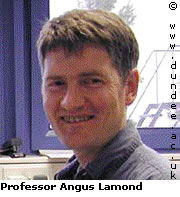
A collaborative research project between scientists in the UK and Denmark has made a significant breakthrough in unravelling the secrets of the human genome. The work was carried out by scientists working at the Wellcome Trust Biocentre at the University of Dundee, which was awarded a five star rating for its international research by the UK's Research Assessment Exercise, in collaboration with researchers at Odense University in Denmark. The scientists identified over 270 human proteins assembled in a part of the cell called the 'nucleolus,' where the machinery which makes proteins is housed. As a result, 18 new human genes have now been categorised. The recent sequencing of the human genome described the genes which all humans carry in their cells, but it did not reveal the functions of most of these genes nor identify where in the cell they act. Professor Angus Lamond, who led the team at the University of Dundee's school of life sciences, said the work represents a major step forward as 'the Human Genome Project [to map the human genome] described the basic code of DNA but didn't tell us their function.' He said this is equivalent to 'having a library where you know all the books but have no way of classifying them.' He said the identification of proteins in the nucleolus will enable scientists to isolate those proteins affected by disease and target them with drugs. He said the discoveries could have important implications for future medical therapy, and that 'the Human Genome Project was a starting point, not an end.' Professor Matthias Mann, who led the Danish research team, described the work as 'a major technical achievement and the largest study of this kind to be accomplished so far.' Professor Lamond, who worked at the European Molecular Biology Laboratory (EMBL) in Heidelberg, Germany, from 1987 to 1995 and is President of its alumni association, said his collaboration with Danish scientists was a good example of the kind of cooperation foreseen for Research Commissioner Busquin's European research area. 'I am a supporter of bringing down barriers to collaboration,' he said.