


TRAIN-IT project drives commercial exploitation of IST results
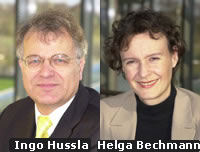
The core aim of the Framework Programme's information society technologies (IST) priority is to carry out research to identify those future technologies that will enhance the lives of European citizens. Another motivation behind the programme, however, is to increase levels of innovation and competitiveness within European businesses and industry. Therefore, when the Commission saw that opportunities to commercialise the results of IST projects were being missed due to a lack of relevant skills, it decided to act. The TRAIN-IT project was launched as an accompanying measure to the Fifth Framework Programme's (FP5) IST priority, and is coordinated by the Itzehoe Innovation Centre (IZET) in Germany. As the organisation's head, Dr Ingo Hussla, explained to CORDIS News, he had himself witnessed how opportunities might be missed before setting up the project. 'I saw first hand from participating in the Fourth Framework Programme how daunting a prospect it was to set up a start-up company following an IST project,' he said. 'After the end of the high tech boom, the situation became even more challenging, and now business plans have to be ten times as good as they were during the boom in order to be successful.' The central approach of TRAIN-IT, therefore, was to offer participants in EU funded IST projects free training on business proposal writing from a team of international experts. The first challenge for the team, though, was finding their potential entrepreneurs. 'We had to really hunt them out: we originally sent out around 10,000 e-mails to IST participants, and received 200 responses. This finally resulted in around 20 serious applications for our help,' said Dr Hussla. All potential candidates for the TRAIN-IT course were asked to complete a detailed application to assess the commercial viability of their idea. They would then spent six days with experts from business, venture capital, sales, and marketing from across Europe. TRAIN-IT project coordinator Helga Bechmann, also from IZET, told CORDIS News that having consultants from different parts of Europe lent an extra dimension to their work. 'I really believe in the international angle because it brought the necessary multinational perspective to the business plans from the outset. After all, many of the participants were hoping for commercial success in more than one country.' The regular involvement of a core group of consultants was also significant, as it helped create a TRAIN-IT community that offered expert support to participants far beyond the six day span of the course, she added. Asked what types of skills their course participants typically lacked, Ms Bechmann said: 'They obviously knew all about their own technologies, but were less confident in areas such as marketing and sales, customer analysis and financing. Market research and pricing were issues where people needed most support.' The success of TRAIN-IT is reflected in two different ways. Dr Hussla says that the team is 'proud to have helped set up 36 companies and complete 58 business plans' within the project's three year span, and expects these figures to eventually double. Ms Bechmann adds that having provided training and support for three years, TRAIN-IT is now an established brand, and she does not expect to have to send thousands of e-mails to find participants in the future. As to exactly what the future will hold for TRAIN-IT, Ms Bechmann is not sure, but given that it is now possible to license the certified training course from IZET, she hopes that their work will continue to have an impact. A proposal to continue the project under FP6 is currently being evaluated by the Commission, but whatever the outcome, Ms Bechmann believes that TRAIN-IT will carry on supporting potential entrepreneurs. 'We definitely want to continue the courses, whether through regional funding, licensing of the course, or through FP6,' she concluded.