Storyworlds for education



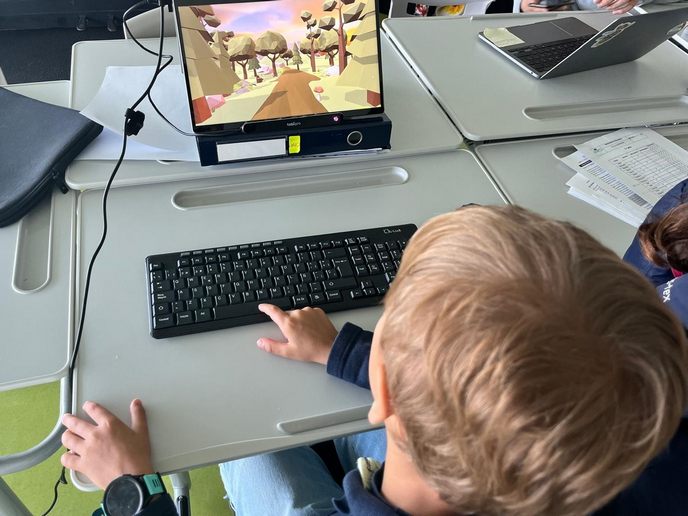
The world is changing faster than ever and demands new skills. Yet schools and teachers are increasingly ill-equipped for such challenges. Education needs more engaging methods, including new curricula and resources. The EU funded LYFTA(opens in new window) project offers a new style of resource. It provides quality interactive multimedia modules, distributed via an on-demand internet platform. The resources promote holistic learning. Phenomenon-based learning Students interact with the system by selecting places, called storyworlds, from a game-like map interface originally designed for younger users. Using existing technologies, such as computers and tablets, students explore storyworlds in 360o via multimedia content that provides engaging human stories. “The environments are always depictions of real places and real people, and the design is so seamless that it feels like you are really there,” says Paulina Tervo, co-founder and co-CEO of the Lyfta company, the only partner in the EU project of the same name. “Each 360o space represents the home or workplace of a person, whom the students can meet via photographs, articles, and short video documentaries.” The highly visual learning environment develops deep learning. It also improves retention, skill development, and practical application of knowledge. The shift from curriculum-specific to project- or phenomenon-based learning additionally helps teachers address complex global issues. Since the approach is not subject oriented, it is applicable to any themes. During the project, researchers developed new business plans, including a webinar-based customer recruitment model to help teachers start using the product and introduce it to colleagues. Another result was new partnerships targeting the Finnish and British K-12 educational markets. As a data-gathering exercise, the team launched a pilot programme in 50 American schools. Drawing upon surveys of over 120 UK and Finnish schools, the project team substantially upgraded the interface. Now it is more intuitive, and user-friendly for teachers. A considerable amount of educational content, in several language versions, has been added. LYFTA also devised new ways of acquiring content via third-party creators. Virtual reality The future system will be upgraded further. The students’ interface map will eventually include the whole globe. Teachers will be able to filter modules according to topic, age group and many other search terms. The system will also enable the customisation of existing content for specific purposes. Even further ahead, the content may eventually be available for augmented- and virtual-reality systems. “For now there’s no market for those in schools, because very few schools have available devices, although this may change,” added Tervo. “We are working on making the content available in those media in addition to conventional technologies.” The future will also see continued refinement of the business models. Specifically, the LYFTA team plans to keep K-12 schools as the main market while branching out to teacher training institutions, libraries and other educational groups. Perhaps the days of students passively sitting in class while a teacher talks are coming to an end. The Lyfta system will help make learning more interactive, explorative and engaging.