


Kroes gives preview of framework for State aid for R&D
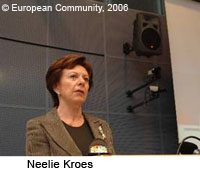
EU Competition Commissioner Neelie Kroes has given details of a new 'Framework for State Aid for Research and Development (R&D) and Innovation', on which the Commission is currently working. The new framework, to be adopted by the Commission in the second half of 2006, will promote 'less and better targeted aid', said the Commissioner. 'We know that there are many market failures in this field. Some public intervention in this field is indeed needed to fill the gaps left by spill-overs, externalities, asymmetric information or coordination problems. But this intervention must truly target the market failures. Otherwise, it will simply crowd out private investment. It will keep inefficient firms afloat and will reduce competitive pressure. It will create disincentives to private activities.' The framework will also tackle the legal uncertainty that some non-profit research organisations experience when they receive funding - it is not always clear whether the funding amounts to State aid. 'Our new rules should clarify this and enable both contractual and not-for-profit research to flourish on a level playing field,' said Ms Kroes. The Commissioner also referred to large, high-risk research projects, which cannot be financed by a single company or Member State: 'Where these projects are in the common European interest, our rules must ensure they take place. But we do need to develop a joint understanding of what 'common European interest' means, how to test it, and what types of projects should qualify,' said Ms Kroes. Support for small and medium sized enterprises (SMEs) and start-ups is also foreseen in the new framework. The Commission would like to allow Member States to provide support to start-ups in the first few years following their establishment, when they face a real funding gap, explained the Commissioner. Ms Kroes is also considering allowing public intervention in order to enable SMEs to buy services from 'innovation intermediaries'. Ideas on helping SMEs to attract researchers and other experienced personnel are also under discussion, as are proposals on supporting innovation clusters. The framework will, according to Ms Kroes, create incentives for companies to engage in more cross-border collaboration, and encourage public-private partnerships. Ms Kroes was also keen to point out that subsidies are not the only tool that public authorities have to create the right competitive conditions. Infrastructure, the education system, universities, labour and tax laws, as well as the regulatory framework, all have a significant bearing on R&D and innovation, and should not be neglected, she said. 'Unfortunately, I cannot shape 25 national economic frameworks to attract more R&D. Nor do I control a European budget which could be used to fund projects. But as European Competition Commissioner, I can and have to provide good State aid rules for R&D and innovation which help Member States better focus subsidies more effectively,' said Ms Kroes.