


Dutch solar energy system picks up Altran Foundation for Innovation Award
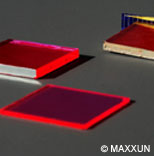
The Altran Foundation for Innovation 2006 Award has gone to MAXXUN, a Dutch start-up company that has developed a 'groundbreaking' low cost solar energy system. It will receive one year of free consultancy services from Altran's team of engineers to develop and implement the system. A special award also went to the French company Pragma Industries for its work on a new kind of fuel cell technology. For 10 years the Altran Foundation for Innovation has rewarded technological innovation in Europe. The theme 'technology innovation and energy' was chosen for the 2006 edition of the award, for which Janez Potocnik, European Commissioner for Science and Research, was patron. The subject was chosen in order to highlight the urgent need to raise awareness of, and tackle the rise of, energy consumption and related environmental problems. 'Technological innovation alone will not be enough to overcome the immense challenge represented by climate change. But without technological innovation, humanity will be unable to face up to the greatest transformation to be accomplished by a generation, i.e. our generation,' said Corinne Lepage, President of the 2006 Award Jury. The winning Dutch innovation is a luminescent solar concentrator (LSC) system featuring a large plastic sheet, a florescent layer and a solar cell. Its originality lies in its use of newly developed fluorescent molecules which are capable of absorbing light and retaining it within a solar cell by means of 'total internal reflection'. From there energy is produced. Normally solar cells require a lot of costly substrate materials, enough to cover a large surface area in order to produce sufficient energy. The Dutch system aims to reduce the size of the solar cell for the same amount of energy harnessed, thereby leading to a significant reduction in cost. In fact MAXXUN claims that its system is capable of lowering the investment needed for solar energy, as well as the costs of the generated electricity, by more than half compared to commercially available systems. The system is also compatible with existing electricity grids. MAXXUN says that it hopes to be ready to bring the system first to the German market and then to the whole of Europe within the next six years, targeting households and small to medium sized enterprises (SMEs) in these markets. The Dutch company hopes that the innovation could also be exported to energy markets in Africa or Asia. Picking up a special award at the ceremony was French company Pragma Industries, recognised for its development of a new geometric concept and a new assembly process for fuel cells. The defining feature of the assembly process is that it does away with a number of costly components used to date in conventional cells. Fuel cells use hydrogen and oxygen to produce electricity and reject water only. This 'clean' energy technology is of particular interest to car manufacturers, given that it has a higher autonomy than that reached with usual batteries, and the same life expectancy as that of an internal combustion engine. However, the prospect of hydrogen cars would seem to be a long way off given the cost, volume and weight of current fuel cells which is hindering their commercialisation. The French concept aims to speed up the delivery of this technology by replacing many expensive components of the fuel cell with cheaper, lighter and smaller materials, resulting in the development of automated industrial production. These materials include 'gas diffusion layers', which Pragma Industries claims are new and allow around 90 per cent more electricity conductivity than materials usually used in this industry. //CPA For more information, please visit: http://www.fondation-altran.org/DevSite/index.jsp(opens in new window)
Countries
Netherlands