


Scientists develop breast cancer blood test
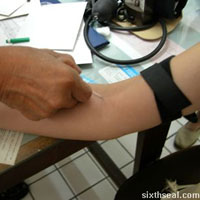
A team of international scientists based at universities and companies in the UK and the US have developed a blood test able to give early warning indications for breast cancer, which could save thousands of lives. Breast cancer is the most prevalent cancer among women in Europe, responsible for 26.5 per cent of all new cancers and 17.5 per cent of cancer deaths in women, according to the European Commission. These figures are increasing as the average age of the female population rises. The results of the first trial of the blood test, published in the Journal of Proteome Research, show sensitivity and specificity of around 95 per cent. The pilot studies involved 250 patients and 95 controls. 'Our pilot studies show that using blood samples, breast cancer and several other types of epithelial [cells that line the internal and external surfaces of the body] cancers can be detected with much better sensitivity and specificity,' says Professor Jasminka Godovac-Zimmermann from University College London. 'This may allow new, less intrusive, safer and much less expensive approaches for the early diagnosis of cancer, for distinguishing malignant and benign cancers, and for monitoring cancer therapy.' The blood tests involve multiphoton-detection, which increases sensitivity to cancerous or precancerous cells 200 to 1,000-fold. According to the paper by Professor Godovac-Zimmermann, 'This has allowed the measurement of cancer biomarkers with very low concentrations in blood that could not be measured for full patient cohorts with conventional immunoassays.' Identifying the presence of cancer when it is still at an early stage, when a person still feels normal, could save many lives. Currently, diagnosis involves triple testing: breast examination, imaging with mammography and ultrasonography, and then biopsy. This screening takes time, and is also less effective in young women, for whom mammography is less sensitive.
Countries
United Kingdom, United States