


JRC reports increased risk of forest fires
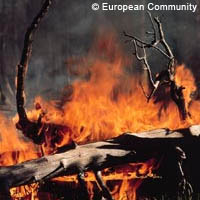
Although fewer hectares of forest have so far gone up in fire this summer compared to 2005, the risk levels have been considerably high and unusually widespread throughout Europe. These are the latest mapping forecasts from the Joint Research Centre's European Forest Fire Information System (EFFIS). It reports that some 64,500 hectares were burnt by forest fires in the EU up until 31 July. In northern regions of Europe an unusually high fire danger was recorded in spring and early summer. Due to the heat wave that hit much of this region and the ensuing drought, forest fires were reported in countries such as Norway and Ireland, where they were previously seen only very rarely. Fires were also reported in Austria, the Czech Republic, the United Kingdom, Lithuania, and Sweden. In the Mediterranean Region, the season started early with large fires already occurring in May in southern and western France and southern Spain. The risk was somewhat reduced during the month of June, but picked up again in July. Since the beginning of August, the region has witnessed a sharp increase in fires and burnt areas, mainly in Galicia in Spain and in neighbouring Portugal. The total area devastated by the fires has increased from 13,591 to 49,881 hectares and from 2,241 to 88,473 hectares in these countries respectively. While far less critical than 2005, when a total of 610,000 hectares (equal to twice the size of Luxembourg) were burnt, the JRC warns that the season is still not over. Data on the areas affected by the forest fires was received via satellite imagery from the EU Member States and compiled by EFFIS. The system was developed by the European Commission to monitor forest fire risk in Europe and provide Member States with early risk warning and damage assessment.