


Make the most of research funding opportunities, Potocnik tells EU food industry
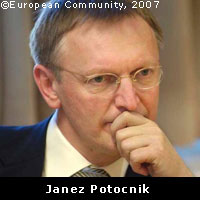
EU Science and Research Commissioner Janez Potocnik has urged small businesses to make the most of the research funding opportunities available for the future competitiveness of the European food industry. Speaking at the 'Perspective for Food 2030' conference, Mr Potocnik recommended that the EU's food industry, consisting mainly of small and medium sized enterprises (SMEs), to undertake research that takes into account the whole food chain - from the beginning to the end of the food cycle - in order to meet the industry's innovation challenge. 'Food is not just about what we put on our plates. It influences many other areas, such as the environment, health and the economy,' he said. 'This means opening up to other disciplines by involving converging technologies, such as neurosciences, biotechnologies and nanotechnologies. Learning from other disciplines can mean productivity gains and energy savings,' he added. Although the food industry is the EU's leading manufacturing sector, industry spends significantly less on research and development (R&D) than its global competitors, the United States or Japan. This is mainly due to the fact that 99% of the 283,000 European food companies are SMEs, which cannot devote the extensive time or resources to lengthy research processes. Mr Potocnik therefore called for more private investment in food R&D and encouraged SMEs to make the most of funds available at regional, national and European level for research and innovation in the food sector. He specifically pointed to the opportunities available in the EU's Seventh Research Framework Programme (FP7) and the improved conditions for SMEs' participation. These include, among others, increased potential funding of SME research projects up to 75%, the inclusion of SME specific calls for proposals and the simplification of procedures for participating in FP7. Combining these elements would involve change and making research a major tool for advancing the food industry, through innovation, cooperation and knowledge, said Mr Potocnik.