


Importance of university studies growing
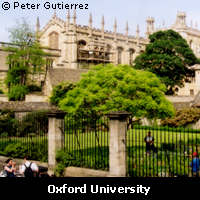
Education systems are continuing to expand at great speed. This is one of the key findings of the study 'Education at a Glance 2007', presented on 18 September in Berlin by the Organisation for Economic Cooperation and Development (OECD). An ever increasing number of people are entering university-level education at some point in their lives. On average, this applies to more than half of school leavers in OECD member countries. Some 40 years ago, it was little more than one in 10. Over the past decade, the OECD finds that student enrolment in tertiary education has increased by an average 41%. At the same time, money spent in this area has more than doubled. Whether a student successfully completes a course of study, however, will frequently depend on the duration of the programme: The shorter it is, the more likely students are to graduate. Rates of graduation from traditional universities do not exceed 20% in Austria and Germany, for instance, where programmes tend to be longer. On the other hand, more than 40% of Finish, Italian or Polish students - among others - complete their degrees. Fears of a crowding-out effect, whereby a growing number of graduates would result in more unemployment for the lesser qualified, appear to be groundless. 'There are still no signs of an 'inflation' of the labour-market value of university-level qualifications,' said OECD Secretary-General Angel Gurria at the presentation. 'On the contrary, in some of the countries with the fastest growth of the university sector the earnings and employment benefits of university degrees keep growing.' Expanding higher education can even boost job chances for early school leavers, says the OECD: Higher education attainment in France and Ireland, for example, grew rapidly between 1995 and 2004. All the while, unemployment among those who had received less education either declined or stagnated. The opposite could be witnessed in Germany, the Czech Republic and the Slovak Republic, where there was little or no growth in higher education. At the same time, a growing number of the less-qualified were unemployed. It is still true, however, that employment rates tend to improve with educational attainment in most OECD countries, the study says. Furthermore, individuals with university degrees and advanced research education are better paid: Their earnings are often at least 50% higher than those of people who have not gone to university. Generally, young people today prefer to study the social sciences, business and law. Three times as many younger adults hold degrees in these subjects as older adults, whereas engineering does not seem to spark the interest of many students. 'In Denmark, Germany, Hungary and Norway, there will soon be more engineers leaving the labour market than have entered in recent years,' the OECD points out. The study 'Education at a Glance' is published annually. It portrays and analyses data on education in the OECD member countries as well as a number of partner economies. The main areas covered include participation and achievement in education, public and private spending, the state of lifelong learning and conditions for pupils and teachers. 19 out of 30 OECD member countries are also part of the European Union.