


Naama Barkai wins new FEBS/EMBO Women in Science award
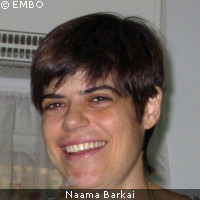
The Israeli systems biologist Naama Barkai has been named as the first ever winner of the FEBS/EMBO Women in Science award, which the Federation of European Biochemical Societies and European Molecular Biology Organisation launched in 2007. The award, which will be handed out annually, recognises the exceptional achievements of a female life sciences researcher over the previous five years and whose work will inspire future generations of women in science. Professor Barkai, who is based at the Weizmann Institute of Science in Rehovot, Israel, won the award for her outstanding contributions to the field of systems biology and the mathematical modelling of biological systems. In a statement, the EMBO and FEBS praise her for her 'originality and creative research as not only revolutionising the field of systems biology but also significantly changing the way scientists think about complex biological processes.' Professor Barkai will receive her €10,000 prize on 2 July in Athens, Greece, during the 33rd FEBS conference and the 11th conference of the International Union of Biochemistry and Molecular Biology (IUBMB). She will also present a special plenary lecture at the event. 'I am honoured that FEBS and EMBO have recognised my work,' said Professor Barkai. 'Women are under-represented in academia and this award helps to raise awareness of the opportunities for female scientists to further their research careers.' Naama Barkai received a PhD in physics from the Hebrew University for research into the statistical mechanisms of learning. She then spent time in the US, at Harvard and Princeton Universities, where she worked on the theoretical analysis of biochemical networks. At the Weizmann Institute of Science, she is based in the departments of Molecular Genetics and Physics of Complex Systems. There she uses mathematical modelling and computational tools to identify the principles that govern the design and function of biological networks. Theoretical results are backed up by experiments in the laboratory. 'Our goal here is to understand the biological constraints that are imposed on a particular system, and the impact of those constraints on the structural design of the network,' reads Professor Barkai's website. Using the fruit fly as a model, her team is investigating the ability of the networks that regulate development to cope with changes in gene dosage and environmental conditions such as temperature and nutrient availability. Another area of interest is the organisation of the cellular transcription programme. New technologies enable scientists to measure the activity levels of all genes simultaneously. One of the main challenges in this area is finding a way to understand the underlying genetic network on the basis of the observed gene expression data. Over the course of her career, Professor Barkai's work has won her a number of honours and prizes, including the Helen and Martin Kimmel Award for Innovative Investigation in 2007, the Teva Prize for Research in Systems Biology in 2005 and the Morris L. Levinson Biology Prize of the Weizmann Institute of Science and the Michael Bruno Memorial Award in 2004. She was an EMBO Young Investigator from 2001 to 2004, and was elected as an EMBO Member in 2007. 'Naama's work is consistently inspiring,' commented her colleague at the Weizmann Institute of Science, Professor Uri Alon. 'She has, in my opinion, identified some of the most fundamental problems in systems biology and proposed elegant and powerful answers.' Nominations are now open for the 2009 edition of the FEBS/EMBO Women in Science award. Nominees should be women scientists based in Europe who have significantly advanced our understanding of a particular branch of the life sciences, including agricultural and biomedical research. Entries will be judged by an eight-strong committee of leading scientists on the basis of scientific excellence as well as leadership and mentorship qualities. The closing date for nominations is 15 August 2008.
Countries
Israel