


Galileo clears final regulatory hurdle
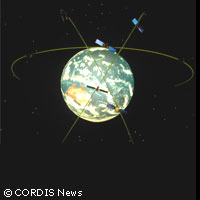
The European Parliament has approved a regulation laying down the procurement rules and security requirements for Galileo, the European satellite navigation system. The agreement is expected to allow the system to become fully operational by 2013. By a margin of 607 votes in favour to 36 votes against, and 8 abstentions, MEPs put an end to several months of tenuous negotiations between the institutions on a plan to rescue Galileo, after a private consortium of companies pulled out of the project in 2007. 'We are sending a clear signal to Europe and the whole world that we are still firmly committed to providing every citizen and enterprise in Europe with a high-quality satellite navigation service by 2013. New jobs will be created and Europe will claim its rightful place alongside the technologically most developed world powers,' said the current President of the EU Transport Council, Slovenian Minister of Transport, Radovan Zerjav. Under the new agreement, the EU will be wholly responsible for providing the €3.4 billion needed to build Galileo's initial infrastructure, although financial contributions from Member States and Third Countries have not been excluded. In terms of who pulls the strings, the Community will have 100% ownership of the project. The regulation foresees the establishment of a Galileo Inter-Institutional Panel (GIP), comprising representatives from the European Commission, Parliament and Council, which will oversee the implementation of both Galileo and the European Geostationary Navigation Overlay Service (EGNOS). The regulation also outlines the public procurement rules for the project. Contracts for building the infrastructure will be split into six packages: system engineering, ground mission stations, ground control stations, satellites, launchers and operations. Companies will not be allowed bid for more than two packages. To avoid dependency on any one supplier, the MEPs agreed that a dual sourcing system should be adopted, whereby two suppliers would be used for one product. Furthermore, the regulation stipulates that at least 40% of the total activities should be subcontracted to companies that do not belong to the prime contractor of any of the packages. The project's security procedures are also clarified in the new regulation, which calls for controlled access to the technologies that provide security to Galileo and EGNOS. It also states that Member States should draw up their own security regulations, similar to those for EURATOM, which guarantee that information on the two programmes remains classified. In the event of a risk to security, joint action should be taken under the Common Foreign and Security Policy. The European Global Navigation Satellite System (GNSS) Supervisory Authority (GSA) will be responsible for implementing these procedures and performing system security audits. With the new regulation, the Galileo looks like it is back on track for full deployment by 2013. In the meantime, work is under way to launch the second of the project's experimental satellites at the end of April.