At-home fluid management for chronic heart failure

Chronic heart failure(opens in new window) (CHF) affects millions of people worldwide and is a major cause of hospitalisations across Europe. The condition can impair kidney function and lead to gradual fluid accumulation across the body, including the lungs. As a result, patients experience repeated episodes of sudden worsening marked by rapid fluid buildup and breathlessness with poor survival, underlining the urgent need for better long-term management solutions. Current hospital-based fluid removal strategies are reactive rather than preventive, relying on aggressive diuretics or one-off procedures that remove large volumes of fluid in a short time. However, these approaches stress the kidneys and are ineffective for a significant proportion of patients.
A new implant for continuous fluid removal
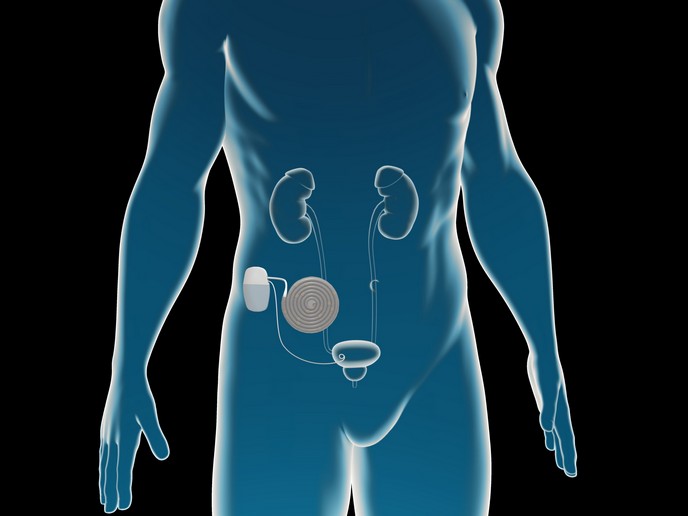
To improve the outcome of fluid overload in CHF patients, the EIC-funded FILBERT project set out to develop a fluid-removal solution for use at home. “Our implantable system works around the clock to prevent fluid congestion, tackling the root cause of recurrent patient admissions,” explains project coordinator Rann Marom, CEO of Paragate Medical(opens in new window). The implant itself is inserted in the peritoneal cavity and functions as a pump-controlled mechanical bypass of the kidneys. By applying a gentle, controlled pressure gradient in the tissues, the system continuously draws excess systemic fluid and slowly diverts it via a catheter into the urinary tract. Instead of waiting for patients to become severely congested, the implant prevents recurrent congestion. Importantly, the FILBERT device removes salt in amounts several-fold greater than what the kidneys could eliminate on their own. Excess salt is a key driver of congestion and of the chronic disease’s deterioration.
Remote monitoring for personalised therapy
Alongside the implant, FILBERT incorporates a cloud-based platform that integrates data from embedded abdominal sensors. These monitor congestion markers previously measurable only in intensive-care settings. Clinicians can review trends remotely, fine-tune pump settings and deliver truly personalised therapy, reducing the need for hospital visits. The system has been validated in a small number of patients, demonstrating safe and effective removal of salt-rich fluid. Patients reported improved breathing and quality of life. In one case, re-hospitalisations dropped from four per year to zero.
Clinical integration
FILBERT is designed to complement existing CHF strategies. Initially, it is envisioned for patients who remain congested despite guideline-directed therapy. The idea is to identify eligible patients within cardiology departments of large hospitals to undertake the minimally invasive implant procedure. “Our newly developed delivery technique is a significant achievement as it broadens patient eligibility and reduces procedural risk,” emphasises Marom. With the integration of the abdominal congestion-monitoring sensor (and potentially with third-party remote patient monitoring sensors) along with future development of intelligent data analysis and algorithms, FILBERT promises to evolve into a fully automated, closed-loop therapy system. Next steps focus on expanding clinical evidence through extended trials and enhancing the implant so that it is ready for the commercial market. Clinical safety and efficacy, alongside simplification of the implantation procedure will assist regulatory approval of the FILBERT system. Long term, the goal is to integrate it into routine CHF care across Europe, offering patients greater stability and independence.