European policies could benefit from Indigenous fishing knowledge

Small-scale Latin American fisheries(opens in new window) face various social, economic and political challenges, exacerbated by transnational differences in languages, institutions and governance which hinder effective ocean management. Meanwhile, within these countries, unequal access to fishing grounds, habitat degradation, competition between sectors, increasing urbanisation and tourism, alongside the impacts of large infrastructure such as ports and wind farms, are all also impeding effective ocean management efforts. “Worryingly, rather than providing a solution, emerging Blue Economy initiatives(opens in new window) could actually reinforce existing social struggles,” says André Colonese, coordinator of the EU-funded TRADITION(opens in new window) project which studied prehistoric to current-day small-scale fishing in Brazil. Colonese argues that TRADITION’s findings offer insights for European fisheries and policymakers(opens in new window), especially related to sustainability concerns.
Blending archaeological, historical and contemporary insights
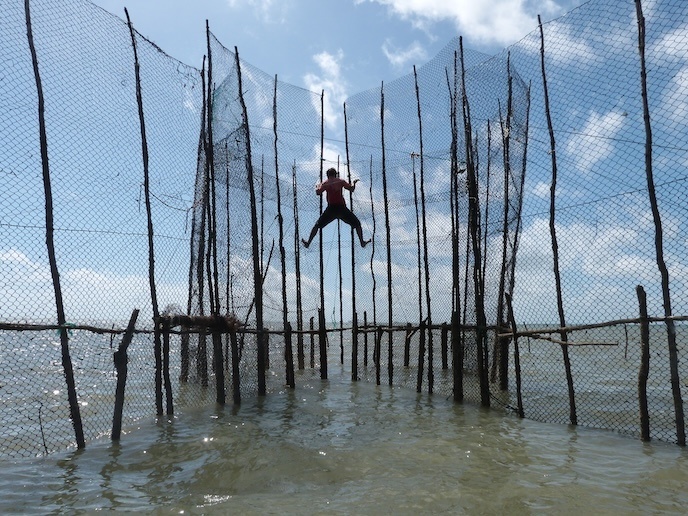
With no pre-European written records available, archaeology was indispensable in revealing how ancestral Indigenous groups interacted with, managed and valued coastal environments. Historical documents, such as government reports, enabled the investigation of large-scale system dynamics, along with the influence of political regimes and fisheries policies. In addition, analysis of newspaper archives enabled an assessment of consumer perceptions of marine systems over 200 years. TRADITION, which was supported by the European Research Council(opens in new window), also worked with contemporary coastal communities in Babitonga Bay (Santa Catarina, southern Brazil) and São Luís Island (Maranhão, northern Brazil), to understand and compare how historical trajectories influenced daily life. Babitonga was chosen due to the exceptional records available, including well-studied archaeological sites extending back 6 000 years. As one of the largest industrial fishing regions in Brazil, it also enabled the study of how the sector interacted, overlapped or competed with small-scale fisheries and ancestral practices. While São Luís Island also afforded access to archaeological sites, it provided an alternative contemporary view, where small-scale fisheries contribute most of the landings. “Despite the growth of industrial fishing and aquaculture in southern Brazil, we found that small-scale fisheries remain crucial to seafood production, processing and supply chains, demonstrating remarkable resilience,” notes Colonese, from project host, the Autonomous University of Barcelona(opens in new window). As expected, an even stronger legacy of Indigenous practices was observed among communities on São Luís Island, compared to Babitonga groups with a more European-influenced fishing tradition. “But what was striking was the continued use of Indigenous fishing weirs on São Luís Island! Built over four centuries ago, they remain vital today for low-income groups,” notes Colonese. Another surprising finding was that major alterations to coastal systems or marine animal populations were quite recent, in contrast to the Northern Hemisphere, where such changes trace back several centuries. “In Brazil, negative impacts only become evident from the late 19th and early 20th centuries, due to intensified fishing driven by policies, growing demand and population expansion in coastal areas,” adds Colonese.
Learning from Indigenous knowledge
TRADITION’s findings have pertinence for today’s political debates about the effects and limitations of global economic forces and strategies. For example, rather than industrial fishing fleets intensifying pressure on marine ecosystems, EU initiatives could better support small-scale European fishing. “People dependent on local resources and unable to relocate when stocks are depleted, hold valuable detailed knowledge about the risks of exploitation. We should be tapping into that more, while simultaneously enhancing local food security, employment and heritage value,” explains Colonese. But, Colonese argues, this kind of informed policymaking necessitates the sustained collection of social, technological, financial and ecological fisheries data to monitor progress, and that takes long-term commitment and political will.