



A new approach to movement in later life

Everyday movement is essential for ageing well. Mobility is critical for engaging in many meaningful activities, such as visiting a friend or relative. Most research has focused on the physical and cognitive limitations affecting outdoor mobility, and how this impacts the notion of ‘active ageing’. Yet this may emphasise the importance of being active too much. “Our project shows that it is important for older adults to maintain a balance between being physically active and resting, between engaging in social activities and individual activities,” explains Louise Meijering, professor in Health Geography at the University of Groningen. “It’s important to be able to engage in activities that are meaningful for us as we age, but activity and rest should be balanced out.” In the MeaningfulMobility(opens in new window) project, which was funded by the European Research Council(opens in new window), Meijering and her team developed a new integrative approach that explains mobility in later life in relation to health and well-being. Through an in-depth analysis comparing three categories of older adults, researchers gained a deeper understanding of what constitutes meaningful mobility as people age. “We have brought mobility patterns and experiences together to better understand the mobility practices in later life, among older adults in different health and in different sociocultural contexts,” notes Meijering.
A comparative international study of mobility
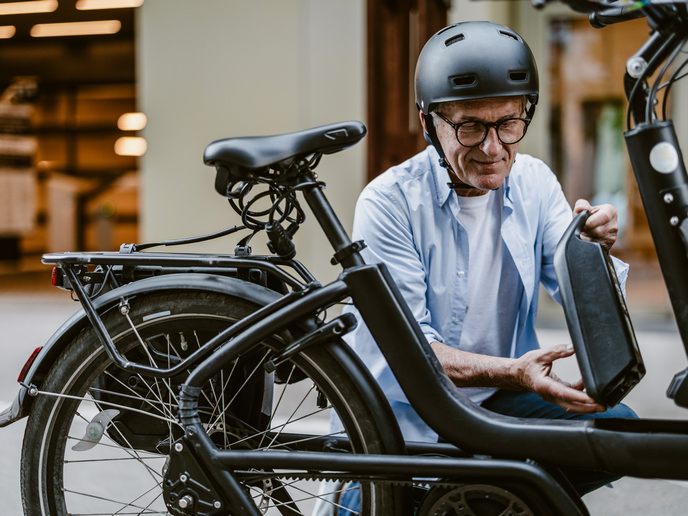
The researchers compared three groups of aged people in India, the Netherlands and the United Kingdom: healthy older adults, survivors of strokes, and adults diagnosed with memory problems such as early-stage dementia. “Overall, we found people are adaptive and resilient when it comes to their mobility and restrictions in light of their impairments,” remarks Meijering. “They find ways to maintain levels and ways of everyday movement that enable them to engage in important activities.” For one thing, this means they use different modes of transportation. Older adults with cognitive impairments who live in the Dutch countryside may use e-bikes to move in and around their village, for example, and ride along with a relative or friend to further destinations. They also adapt in creative ways, such as by installing mirrors on bicycles and taking quiet routes.
Exploring everyday movement through shifting conditions
One highlight from the project was integrating spatial and self-reported data on mobility to understand the seasonality of mobility and activity in later life. “We found that everyday movement is impacted more by weather conditions than by seasonality, although differences in day length in summer and winter did play a role too,” says Meijering. Other important results include demonstrating: how stillness and slowing down could provide respite from an active everyday life(opens in new window) during the COVID-19 pandemic; how mobility capabilities are shaped by being an informal carer(opens in new window); and how capabilities shape the use of everyday technology(opens in new window). The team is now working on a study where we look into different transportation modes, comparing the use of different two-wheeler vehicles in India and the Netherlands.
Broadening the scope of research
The researchers are still writing up some of the final results, and some are exploring similar research in new locations, such as South-East Asia. Meijering is expanding her research to the everyday movement and activity spaces of people with physical and cognitive diversity in different contexts. “The relation between everyday movement, well-being and activity space is so complex and interesting, there are still a lot of new things to learn,” she says.