Chemical upcycling closes the loop on rigid foam waste

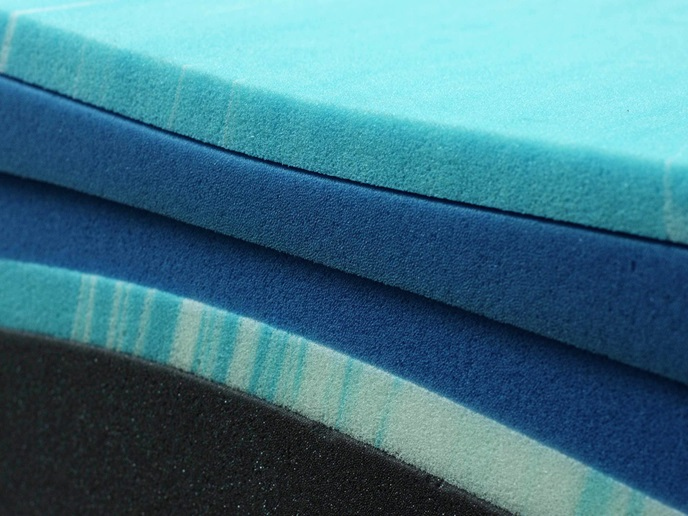
Rigid polyurethane (PU) foam is indispensable to modern industries. Lightweight and durable with low thermal conductivity, it is ideal for applications such as insulation in refrigerators and homes. However, when PU foam reaches end of life, there are no viable recycling options available, so much goes to landfill or incineration. “Annually, 1 million tons of unrecycled PU waste in Europe results in both significant CO2 emissions and lost economic opportunities. The solution is innovative circular value chain management,” says Dorota Pawlucka, coordinator of the CIRCULAR FOAM(opens in new window) project. Working with 26 partners from nine countries, CIRCULAR FOAM combined innovations in collection, sorting and recycling, complemented by optimised materials design, to develop a holistic PU recycling system targeted at refrigerators and construction insulation.
Transforming waste into raw materials
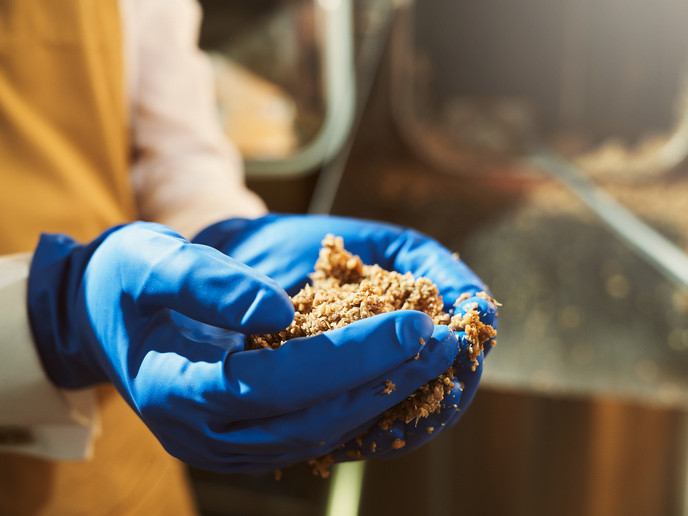
PU is a polymer formed through the chemical reaction of two main chemical components, isocyanates and polyols. “The unique properties of polyurethane rely on its complex composition and cross-linked structure. Consequently, it is not meltable, which almost entirely precludes conventional mechanical recycling,” explains Stefanie Eiden, the project technical lead at German polymer manufacturer Covestro(opens in new window), the project host. CIRCULAR FOAM developed and demonstrated two complementary chemical upcycling technologies to convert refrigerator rigid PU foam waste into high-quality recycled feedstock. Polymers were broken down chemically to recover the polyol and isocyanate components, demonstrated at lab scale at the RWTH Aachen University Catalytic Center(opens in new window), and at Covestro. At project partner Fraunhofer UMSICHT’s(opens in new window) plant, smart pyrolysis was adapted for rigid foam processing to recover isocyanate components. At the end of the project, over 400 kg of end-of-life PU foam was converted, mainly into 300 litres of pyrolysis oil containing aniline, the precursor for isocyanate. At Sulzer ChemTech(opens in new window) in Switzerland, this recycled product was turned into new PU foams. “Our results show that up to 80 % lower CO₂ emissions can be achieved compared to fossil-based aniline production; that’s a game changer for rigid foam that is more sustainable,” notes Eiden.
Innovation across the life cycle
CIRCULAR FOAM also assessed the value chain of rigid PU foam products to identify potential targets for circular economy interventions. “Thanks to regulations, refrigerator collection is already well established, albeit with poor quality end-of-life foam. Meanwhile, the construction and demolition industry don’t have an equivalent collection system,” says Elisangela Gomes Almeida, project manager at waste management company Interzero(opens in new window). To address this, the project developed a recycling model for sandwich panels (PU foam bonded to metal sheet) and insulation boards. A fine-sorting scheme was demonstrated that identifies foams of different composition and recovers contaminants such as flame retardants. A sandwich panel prototype was tested with construction industry stakeholders across five European countries, with the design incorporating key innovations, such as flattened profiles for easier transportation. When stakeholders also expressed interest in Digital Product Passports(opens in new window) for better life-cycle management, Netherlands start-up Circularise(opens in new window) incorporated QR codes for traceability and certification into the panels.
Benefiting citizens, the environment and the economy
By helping to decouple economic growth and innovation from resource extraction, CIRCULAR FOAM’s achievements could help the EU become the world’s first climate-neutral continent by 2050. “Alongside more sustainable appliances and energy-efficient buildings, our work ultimately contributes to a cleaner and healthier environment, while providing opportunities for new businesses,” adds Pawlucka. The team is now extending its chemical recycling technologies and sorting capabilities to other PU-based waste stream compositions, for example through follow-up project United Circles(opens in new window).