Bioartificial pancreas offers a potential cure for type 1 diabetes

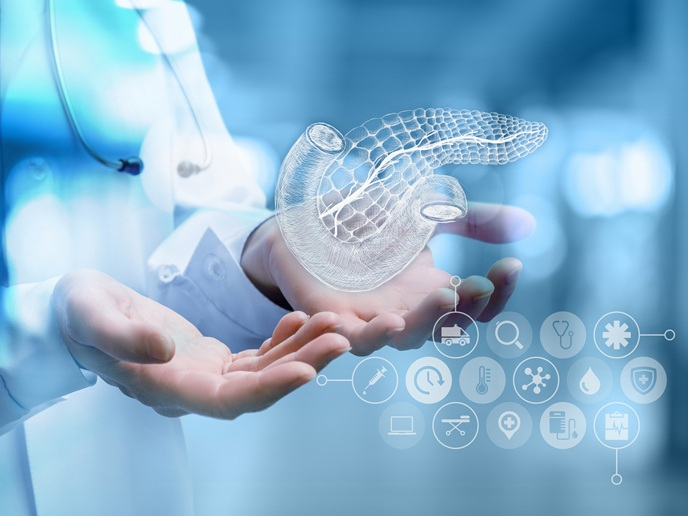
Type 1 diabetes affects more than 2.2 million people in Europe. There is no cure for the condition, in which the body’s immune system attacks insulin-producing cells. However, it can be managed by continuous blood sugar monitoring and insulin injections. More advanced treatment options are available but carry limitations and risks. “Although existing treatments such as pancreatic islet transplantation can help, they are severely limited by the scarcity of human donors and the need for lifelong immunosuppression injections,” says Ekaterine Berishvili(opens in new window), a medical doctor and associate professor at the University of Geneva School of Medicine(opens in new window) in Switzerland. The EU-funded VANGUARD(opens in new window) project aims to improve these treatment options. “Our goal was to engineer a bioartificial pancreas, a construct containing insulin-producing cell clusters embedded in a protective biomaterial that can restore normal blood sugar without having to rely on donor organs or suppressing the patient’s immune system,” adds Berishvili, who served as the project coordinator. Over the course of five years, the project’s six partner institutions(opens in new window) developed a retrievable, implantable medical device that takes over the job of the pancreas to restore the body’s own glucose regulation.
The benefits of a bioartificial pancreas construct
Behind the project’s innovative device are several groundbreaking developments. One of those developments is Amniogel, a hydrogel scaffold derived from the body’s amniotic membrane. “Amniogel protects transplanted cells, promotes the formation of blood vessels around them and provides partial immune shielding – all while being compatible with pharmaceutical-grade manufacturing,” explains Berishvili. The product was recognised by the European Commission’s Innovation Radar(opens in new window) as being market ready and having high commercial potential. The project also delivered human and porcine pre-vascularised organoids, 3D clusters of insulin-producing cells combined with blood vessel-forming cells. When incorporated directly into Amniogel, the result is a complete bioartificial pancreas construct. “Together, these solutions demonstrate that donor-independent, pre-vascularised bioartificial pancreas constructs can restore normal blood sugar – something that simply wasn’t possible five years ago,” notes Berishvili.
Towards a functional cure for type 1 diabetes
According to Berishvili, the fact that the project was able to create its device using cells from pig donors is particularly significant. “One of the biggest barriers to scaling any cell therapy is the scarcity of human donors,” she says. “But porcine cells offer a potentially unlimited, renewable source, and xenotransplantation, once seen as a distant prospect, is now a serious and rapidly advancing field.” The project’s creation has been successfully validated in preclinical studies. There’s also potential for applications beyond diabetes. Amniogel can serve as a scaffold for many other cell types and tissue engineering applications, while the project’s scalable organoid manufacturing approaches open doors for cell therapies across regenerative medicine more broadly. Researchers are currently working to refine the solution’s immune-protection strategies, test improved implantation sites, and advance it towards a first-in-human clinical trial and, ultimately, clinical use. “The path to a functional cure for type 1 diabetes, one that doesn’t depend on scarce donors or lifelong immunosuppression, is now clearer than it has ever been,” concludes Berishvili.