Making sense of ocean observations

In the fight against climate change, managing marine resources and biodiversity is essential. But for an environment to be well-protected, it must first be understood. To this end, the EU-funded OBAMA-NEXT(opens in new window) project has developed information products readily accessible to stakeholders involved in protecting marine habitats.
New tools for describing marine ecosystems
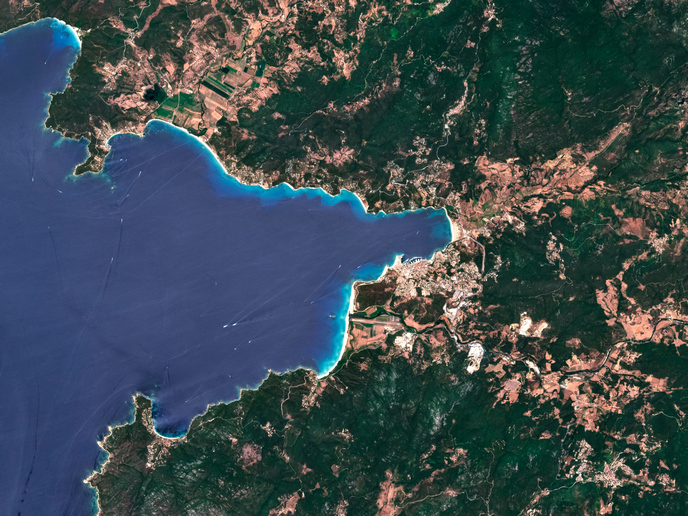
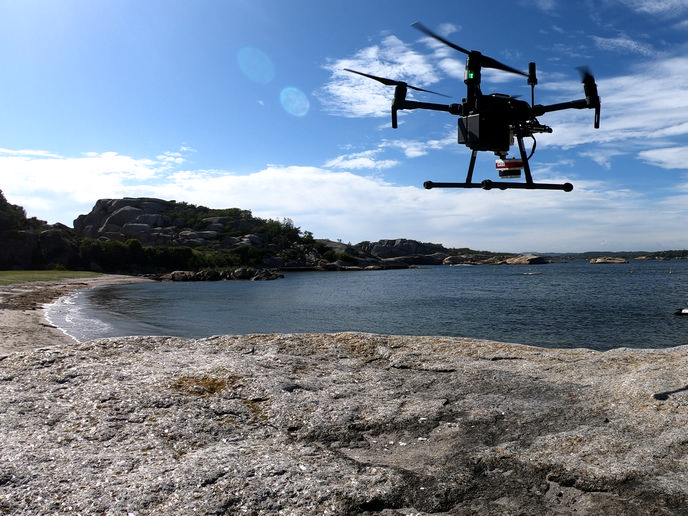
Improving the quality and quantity of ocean observations is a long-standing goal, both in Europe and around the world. Since 1991 the Global Ocean Observing System (GOOS)(opens in new window) has been gathering data to inform stakeholders about ocean health, empower weather monitoring and provide predictive assessments related to climate change. OBAMA-NEXT brings next-generation tools to this endeavour. Satellites, drones and in situ data collection provide important information, as do eDNA(opens in new window) and applications of algorithm-driven machine learning and statistical modelling. As project coordinator Jacob Carstensen shares: “The most important contribution from OBAMA-NEXT is the development of standardised algorithms for translating ‘raw data’ into information.”
A focus on information products
Technical advances have enabled data collection, but raw data need processing to be useful for policymakers and most other stakeholders involved in the stewardship of marine environments. “The success of OBAMA-NEXT is through turning observations into information,” Carstensen explains. “Most new technologies provide massive amounts of data, but these data need to be translated into meaningful information for decision makers. We have demonstrated this through the information product (IP) approach.” The project’s IPs were co-designed with policymakers, conservation managers and other practitioners across Europe. This collaborative and iterative process ensures that the IPs address the needs of stakeholders and align with EU policy frameworks such as the Marine Strategy Framework Directive(opens in new window) and other EU-funded projects such as Marine Protected Areas Europe(opens in new window). Among the IPs developed are high resolution spatial models of habitat and species distributions and habitat suitability modelling for various organisms. Several mapping IPs were developed as well, including maps of coastal vegetation using remote sensing and predictive maps related to fish reproduction. Monitoring efforts using drones and AI applications to quantify the amount of macroplastic on beaches will help evaluate the efficacy of beach-cleaning efforts.
A range of learning sites
To demonstrate the efficacy of the project’s approach, OBAMA-NEXT focused on 12 learning sites that represent the diversity of European marine environments. The learning sites include all four of Europe’s major marine environments: the Atlantic Ocean as well as the Baltic, Black and Mediterranean Seas. The wide diversity of the learning sites was not the only criterion for their selection. The project’s goal – to produce high-resolution IPs – requires more data than could be collected within the scope of the project. “Since the project could not accommodate large-scale sampling efforts, we looked into where data had already been collected with new technology and based on those investigations we decided upon the 12 learning sites,” Carstensen explains. Stakeholders have positive feedback regarding IPs, suggesting ways they might guide biodiversity monitoring and management of marine areas. Already these tools have been adopted by other research projects. OBAMA-NEXT solutions are adding to the pool of precise and relevant information on ocean observation.