Who do fossils belong to?

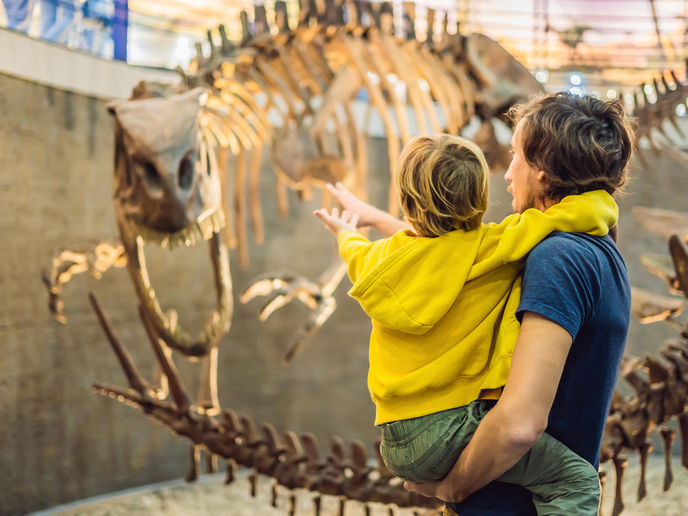
“It depends on who you’re asking, where you’re asking and why you’re asking,” says Yates. A lawyer will give a straightforward legal answer, dependent on local statutes. In the United States, for example, ownership of a piece of land extends to any fossils laying under its surface. But in Brazil, fossils are automatically the property of the state. China considers fossils to be cultural relics of national importance, and pursues the return of any exported without special permission. Ask a member of the public or a palaeontologist, you’ll probably get a different response: “There’s a feeling out there – I think is felt by many people – that fossils are the kind of things that really aren’t ownable by one person,” remarks Yates. “The privatisation of it doesn’t feel quite right. It doesn’t necessarily feel wrong, but there’s something weird about it.” A common feeling is that while it’s fine for children, hobbyists or even academics to own fossils, selling them for millions at auctions isn’t as valid a reason to permit private ownership. Of course, collectors and auction houses would disagree. Yates, an archaeologist and associate professor of criminology at Maastricht University in the Netherlands, says this disagreement is fertile ground for research. “The most beneficial thing for me, as the human that I am, is that they’re preserved in museums, and then I get to take my seven-year-old to see them,” adds Yates. “But that’s not necessarily right. I just think how drastically different the perceptions can be about this to be interesting.” Fossils are included in the 1970 UNESCO Convention(opens in new window) that is meant to prevent the illicit trade of cultural objects. But the Convention doesn’t clearly define what fossils are, leading to further ambiguity. One fundamentally human part of the equation is that fossils hold such cultural appeal to so many of us, even if we do believe in some higher ideals such as science, it’s hard to get beyond the power of the object itself, explains Yates. “I think there’s an inherent contradiction in everyone about this, because these are cool things, and we like touching them, and we like having them near us,” she says. “They kind of force us into making decisions, or making choices we wouldn’t necessarily always make.” Yates explored this tension in the European Research Council(opens in new window) funded TRANSFORM(opens in new window) project, which looked at the often complex relationship people have with Tyrannosaurus rex fossils. These iconic fossils have driven conflict between groups of people and even families, sometimes culminating in criminal behaviour. Through analysis spanning archaeology, ethnography and museum studies, the project sought to understand the human-fossil relationship to better understand associated crimes. Despite the widespread and lucrative black-market trafficking of fossils, many of the ostensibly upright practices of the fossil trade fall into legally grey areas, where crimes could be committed. However Yates’ interest is drawn less to these legal tensions and more to the ethical ones. “There’s ongoing controversy about public museums displaying privately owned fossils, which is perfectly legal, but we have to ask, do we want our public museums to do that?” She notes: “On the one hand, private donations allow the public to see fossils they may not otherwise be able to. But if this lends value to the fossil, it could be sold again for a higher price. Is that what we want our museums to do?” Read more about Donna Yates’ research: Why fight over fossils?