Playing with empathy: immersive museum games make history personal

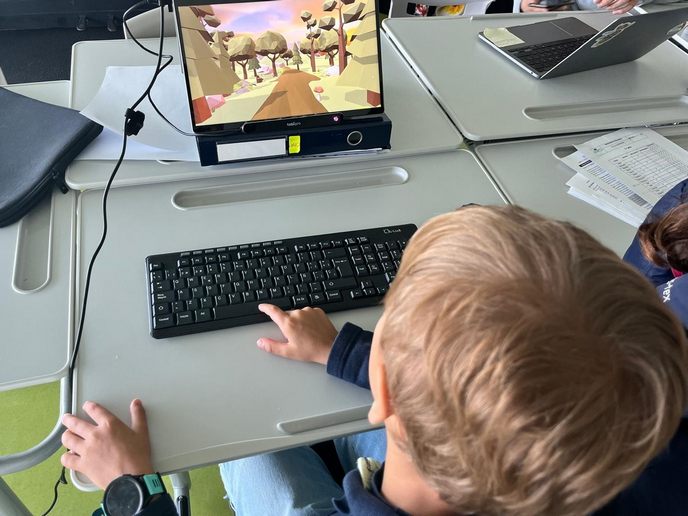
Museums conserve and exhibit the tangible and intangible cultural heritage of humanity for education and entertainment. They offer perspectives on science, culture, conflict, human rights and environmental destruction. Traditional exhibitions often lack the emotional depth needed for empathy and meaningful learning. The EU-funded MEMENTOES(opens in new window) project explored collaborations between game developers and museums to create immersive digital experiences grounded in real artefacts, facts and human stories. The project developed three accessible digital games that turned museum narratives into deeply personal and emotionally resonant experiences. By combining storytelling and museum exhibition design with established game design practices, MEMENTOES demonstrated that immersive games can serve as powerful vehicles for education, empathy and social change.
Immersive games that connect people
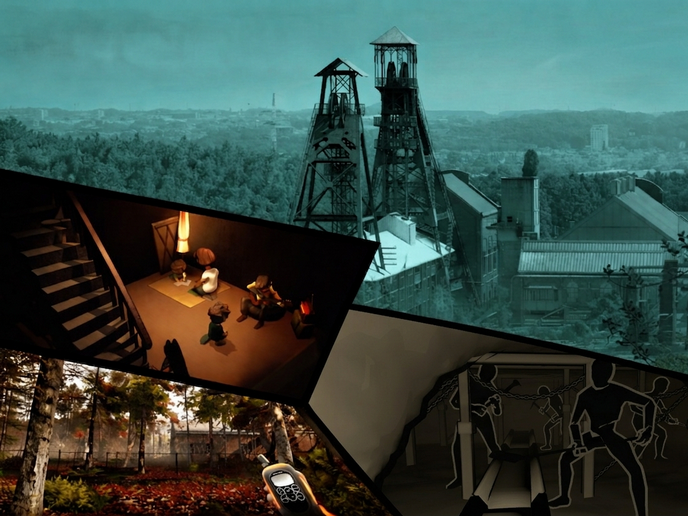
Three museums were chosen to pilot the concept. Le Bois Du Cazier Museum and Causa Creations produced ‘Those from Below’. It focused on a former coal mine and UNESCO World Heritage Site in Belgium best known for the 1956 disaster, which killed 262 migrant workers, highlighting dangers faced by labourers in profit-driven extractive industries. ‘We Grew Up in War’, created by the War Childhood Museum and Charles Games, was built on personal stories and artefacts of children in conflict in Bosnia, Syria and Ukraine. ‘Gulag Diaries’, created by Gulag.cz and ICS-FORTH, drew on expeditions, archival research and an online museum dedicated to preserving the memory of Soviet gulag victims. The games were evaluated through questionnaires, empathy and learning measures, observation sheets and interviews to assess usability, engagement, narrative immersion, emotional impact and knowledge acquisition. “Players exhibited more positive attitudes towards refugees in ‘We Grew Up in War’ and gains in cultural knowledge in ‘Gulag Diaries’ and ‘Those from Below’, alongside reported emotional connection and engagement,” explains project coordinator Nikolaos Dimitriou of CERTH’s Information Technologies Institute(opens in new window).
Beyond information: engagement, empathy and attitudes
MEMENTOES’ outcomes suggest that immersive games can effectively educate about social issues and influence attitudes when combining narrative immersion, historical grounding and perspective-taking. Even short prototype games produced measurable positive changes in attitudes towards refugees and migration. “The studies also indicated that use of multiple perspectives is an important design strategy for representing socially debated issues in a balanced and meaningful way,” notes Dimitriou. By enabling players to emotionally connect with complex historical experiences, the games promote empathy and reflection on contemporary social issues, going beyond information delivery.
Framework and toolkit to scale the immersive games approach
MEMENTOES produced a framework for game developer–museum collaboration, supporting design and evaluation of immersive games that balance entertainment and empathic learning. Its automated accessibility testing will support more inclusive cultural heritage game experiences. Furthermore, AI-supported game creation tools including generative AI, image and video enhancement, 3D asset acquisition and adaptive game experiences offer substantial design freedom. A single reconstructed 3D asset now requires 98 % fewer polygons and can yield unlimited variants. In addition, most methods can be combined to produce game-ready 3D assets from 2D data without compromising visual quality. Culturally, MEMENTOES extends museums’ educational missions beyond physical boundaries. Socially, it provides a scalable, engaging and inclusive model for how immersive media can shape public understanding of history and foster empathy around issues that define the past, present and future.