How digital games helped neurodivergent pupils focus


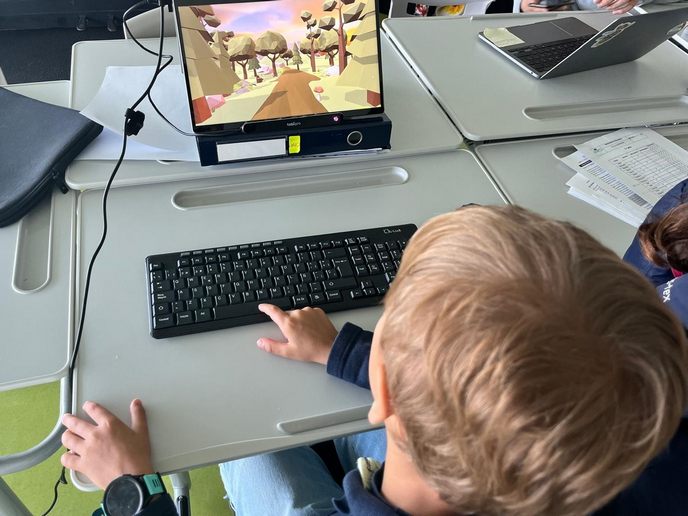
Many digital learning tools are built for average pupils, not for children who find attention, self-regulation or task switching especially hard. For pupils with neurodevelopmental disorders, that gap can turn an ordinary school day into a series of avoidable barriers. The EU-funded EMPOWER project(opens in new window) set out to narrow that gap with a digital platform built around game-based activities, teacher support tools and optional sensors. The platform was co-created with teachers, researchers and pupils, then tested in school settings. By the project’s end, the priority shifted from whether games could run to whether they engaged children, supported teachers and were sustainable in schools.
Games that kept children focused and confident
Cristina Costescu, associate professor in special education at Babeș-Bolyai University, saw the clearest change in sustained attention. As she mentioned, “The change I observed most clearly was in attention and focus. Many of the children came in with significant difficulties sustaining engagement, but over time, I noticed them being engaged for longer periods.” This mattered because the platform maintained an engaging level of difficulty without overwhelming users. Paula da Costa Ferreira, a psychology professor at the University of Lisbon, noticed a different but related shift. “By the end of the project, they managed most game mechanics as expert performers. They seemed very motivated and felt at ease with the games,” she said. Children also became more willing to talk about what they were doing, share it with classmates and show teachers what they could do.
Teacher dashboards and classroom realities
The technology was not only for children. Teachers used an app to assign games to individual pupils and follow progress over time. In everyday school life, this made it easier to tailor activities to different needs and paces rather than treating the whole class the same way. As Costescu put it, “The most useful features for teachers were the progress-tracking dashboards and the ability to assign games to individual children.” The harder part was practical. During initial pilots, device problems sometimes interrupted sessions, and once concentration broke, getting it back was not always easy. Teachers also pointed to a familiar issue that goes well beyond one project: when many children need support at once, schools need enough adults in the room to make personalised work possible.
What schools would need to keep using it?
Children’s engagement stayed high through most of the intervention. Familiarity with the games built confidence rather than boredom, although some wanted to move on once they had mastered a final level. Sensors also became part of the routine surprisingly quickly. For most children, they were not a problem, although eye-tracking calibration could frustrate some pupils with ADHD who wanted to start playing immediately. Parents and schools did not raise major concerns about data collection, largely because the project clearly explained what was being collected, why it was needed and how anonymity would be protected. The bigger obstacle to long-term use was simpler: staff and equipment. Contributors said the games themselves are workable in schools, but the full benefits depend on having enough trained professionals, plus access to computers, tablets or more expensive equipment such as eye trackers and wearables. Even without collecting biodata, the platform still offers a practical game-based resource for more inclusive classrooms.