


Serious video gaming for education, research and health


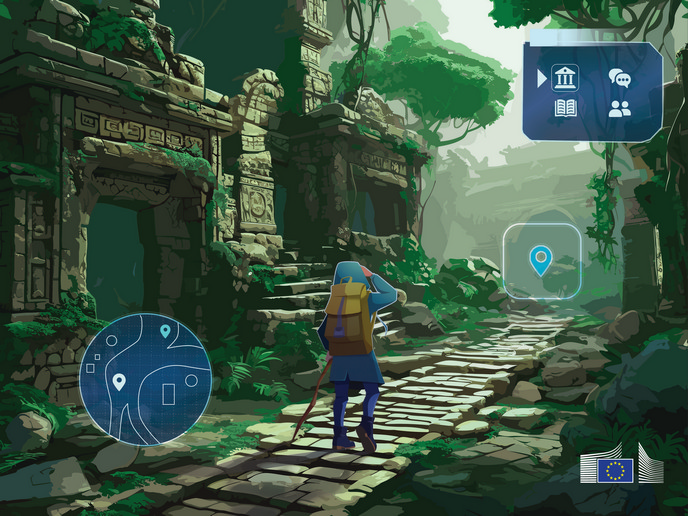
Every day, billions of people around the world forget their worries and relax by playing video games. However, this popular pastime also provides major economic benefits for the countries where video games are created. Video games can be entertaining while also serving as highly effective tools for collaboration and learning. Games designed for purposes other than entertainment are described as ‘serious games’. They employ the latest games technologies, computer modelling simulations and digital interactive media, and they are used by industry, planners, educators and artists, among others. Serious gaming focuses on problem-solving, aiming to deepen understanding of specific topics and build skills through gameplay. Recent years have witnessed an increase in the development and application of serious games and their increasing economic importance. Furthermore, serious games have links to various fields of policy and are relevant to national ministries, several European Commission DGs and European initiatives. Horizon Europe contributes to video game research by funding collaborative, multi-disciplinary projects that explore the cultural, societal and economic impacts of gaming. The aim is to boost the competitiveness of Europe’s homegrown video game industry. It also fosters the emergence of a European video game research community through a dedicated video game cluster to facilitate collaboration, impact and advance research in the field. In addition, local and regional ecosystems of interconnected companies, developers, academic institutions and organisations are enabling the emergence of video game clusters. These clusters combine creative talent and technical expertise to drive innovation. To aid the transition from research to the market, the European Commission supports the early-stage development of video games through Creative Europe MEDIA, but also access to capital for games and technology development in the video game sector via guarantees and equity schemes, drawing from Creative Europe as well as InvestEU. This Pack highlights a range of projects that exemplify how collaborative research under Horizon Europe is driving research into serious games. They span cultural and creative industries, education and training, policymaking and health, highlighting the breadth and impact of Europe’s video game sector and delivering benefits to EU citizens. Museums and other cultural centres can use serious games to go beyond traditional exhibitions. MEMENTOES combined serious games with artefacts to create immersive stories about complex and often contested histories of these objects. The i-Game project focused on creating new routes into gaming for areas such as museums, heritage and education. CULTURATI, EPIC-WE and LoGaCulture enabled cultural institutions to engage with diverse audiences through the co-creation of heritage-related games. GREAT co-designed digital games for discovering citizens’ climate policy preferences and sharing insights with policymakers. MEGASKILLS developed a platform for harnessing widely played commercial video games to evaluate and develop soft skills required by employers. GAMEHEARTS studied how developers, policymakers and players interact to better understand industry trends and integrate European video games into the broader cultural and creative sectors. GAME-ER mapped emerging video game clusters in five EU countries to understand how they develop. Finally, EMPOWER used game-based activities to help pupils with neurodevelopmental conditions. Note: These projects are also presented at the Games For Culture Cluster – Emerging forms of play to benefit society(opens in new window)