The influence social context has on moral decision-making

Shaped by our values, principles and beliefs, we like to think that our internal moral compass is what helps us navigate between right and wrong. But ethical decisions are rarely – if ever – made in a vacuum. They’re always connected to other people and their rights, lives and resources. So, how much of our moral decision-making is actually determined independently? That’s the question posed by the EU-funded YOURMORALS(opens in new window) project. “Answering this question is critical to understanding human morality and the extent to which it is affected by our social relationships, norms and context,” says Eva Vives(opens in new window) a postdoctoral researcher at Ghent University(opens in new window).
Measuring moral conflict
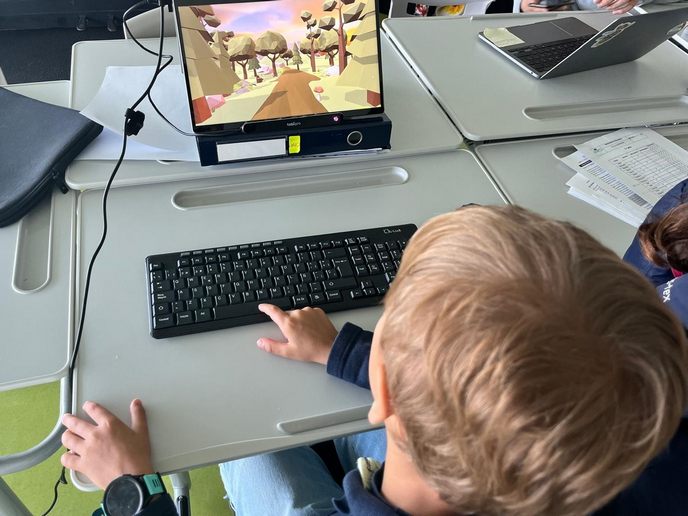
To start, the Marie Skłodowska-Curie Actions(opens in new window) programme supported project characterised the effects social presence and context have on our decision-making when faced with a moral dilemma. To do this, Vives recorded the electrical activity of the brain using both traditional electroencephalography (EEG) and brain-to-brain EEG. The latter is a unique technique that allowed her to measure brain synchronicity between two participants. “We created a moral dilemma game that participants could play while we used the EEG to measure their individual and collective decisions,” she explains.
Making moral choices in high-conflict situations
What Vives found was surprising. “My assumption was that the physical presence of another person at the moment one makes a moral choice would impact an individual’s decision-making, but this in fact was not the case,” she remarks. Vives says this suggests that people might be resistant to others’ passive influence, at least when it comes to personal moral choices made in high-conflict situations. That being said, Vives also observed slower reaction times during the processing of a moral dilemma – specifically at the moment of deliberation. “This suggests that the presence of another individual does impact the deliberation phase of moral decision-making,” she adds.
Towards more realistic morality
In addition to the moral experiments, the project also developed a workflow using a natural language processing model to classify internet entries relating to moral dilemma. The idea was to use this database to develop a series of real-life moral dilemmas. “When reviewing the literature on social context and moral decision-making, it quickly became clear that little research has been done on how people make moral decisions together,” concludes Vives. “Our research helps fill this critical gap.” The project has published some of its research questions in a review paper(opens in new window).