Robotics comes to the aid of the EU’s forests

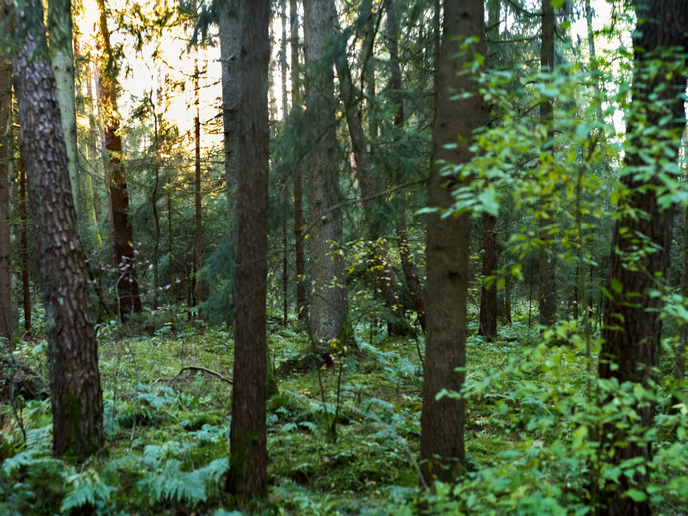
What can be done to protect the woods and forests that are part of our natural heritage when nearly half of Europe’s native tree species are on the International Union for Conservation of Nature Red List(opens in new window) indicating they are under threat? The DIGIFOREST(opens in new window) project has some answers, as principal investigator Cyrill Stachniss(opens in new window), professor at the University of Bonn and head of the Lab for Photogrammetry and Robotics(opens in new window) explains. “We have a vision(opens in new window). Imagine a forest planner logging onto her forestry decision support system in the morning. This has been filled with new data collected the day before by a quadruped robot on the ground and one in the air. “These have provided a detailed model of individual trees, giving the manager an insight into growth and vitality. She can then adjust her management plan to maximise biodiversity values and send it along to her colleague in the field who can apply the knowledge when directing the automated harvester.” To move from vision to application, the project focused on four ambitions: mobile robotic navigation using multi-sensor motion estimation and 3D mission planning; data-driven semantic mapping; data interpretation by a human supervisor; and the deployment of a mobile robot harvester to selectively intervene in an environmentally sensitive manner.
Harnessing a broad range of expertise for next-generation forestry management
This goal required input from experts in robotics from the University of Oxford and Munich along with the Norwegian University of Science and Technology, the Swiss Federal Institute of Technology and the Swiss Federal Institute for Forest, Snow and Landscape Research. Insights into forestry and landscape management, along with how to combine all the strands, came from SMEs. “Getting all stakeholders on board and benefiting from such a range of expertise is one of the real achievements that support from EU funding enabled,” says Stachniss. As the challenges ranged from how to manage robotics over rough terrain and environmental monitoring to programming and software development, diverse expertise was essential.
Taking the guesswork out of the preservation of forest biodiversity
Field trials conducted in various countries across Europe show that the project’s initial vision is within grasp. Stachniss is delighted with the progress made. “We are already attracting interest from forestry companies – a more efficient way of determining how to get the best from an area of managed trees as it is both cost-effective and better for conservation and the environment, so I’m confident our solutions will be applied beyond the end of the project,” notes Stachniss. Two start-ups have already been founded from consortium members to exploit DIGIFOREST’s results: Harsher(opens in new window) in Germany and NavLive(opens in new window) in the United Kingdom.