A more reliable and cost-effective tsunami early warning system

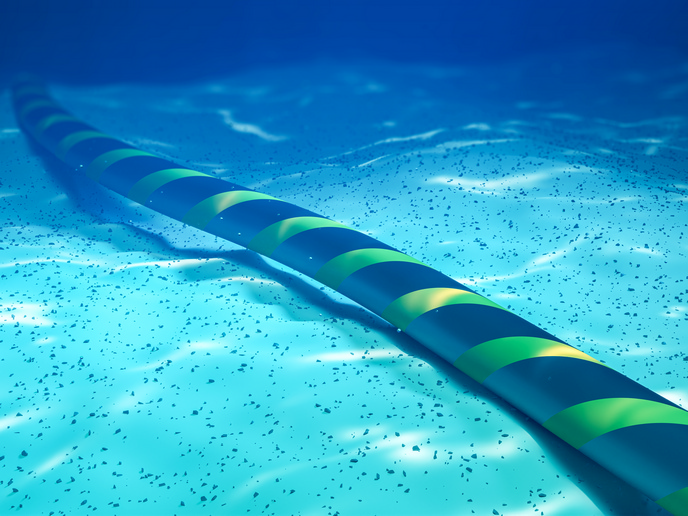
Tsunamis are one of the most destructive forces of nature, inflicting high human and material losses. They are also notoriously difficult to predict. “Although there are some early warning technologies on the market like DART buoys(opens in new window) and Ocean Bottom Seismometer (OBS) arrays, they come with high deployment and maintenance costs and have limited reliability,” says Miguel González Herráez, a researcher at the University of Alcalá(opens in new window). Helping to fill this gap is the SAFE(opens in new window) project, which was funded by the European Innovation Council(opens in new window). Coordinated by the University of Alcalá, the project aims to provide a low-cost, highly reliable tsunami early warning system. And they plan on doing so without requiring any new infrastructure. “Our concept takes existing submarine fibre-optic cables and turns them into a 24/7 tsunami detector that works in real time,” adds Herráez.
A powerful tsunami sensing solution
Behind this innovative idea is distributed acoustic sensing (DAS) technology, which allows light to generate distributed acoustic sensors along the entire length of any submarine cable. “Since submarine fibre-optic cables are present along virtually every coast, this solution has the potential to massively enhance the available network of offshore sensors,” explains Herráez. Without modifying a cable, DAS transforms a fibre into an array of thousands of sensors spaced a few metres apart from each other. The result is a powerful tsunami sensing solution. In fact, the project confirmed that its technology can detect sea level changes, a strong predictor of tsunamis, with an accuracy of less than 20 cm. That means authorities can easily confirm a tsunami while it is still 50 km offshore. While this level of accuracy is more than enough to provide timely early warnings for the most devastating tsunamis, project researchers know there’s room for improvement. “We believe that if we continue to improve this technology, we will reach the 100 km mark – which equates to more time to prepare and more lives potentially saved,” remarks Herráez.
A cost-effective solution for tsunami-vulnerable regions
Not only is the SAFE solution more reliable than OBS arrays or DART buoys, its capital and operating costs are at least 10 times less. “If we add to this the fact that these other technologies are point sensors and that the SAFE system provides thousands of readings with a single piece of equipment, it is clear that our technology has many technical and economic advantages,” notes Herráez. This offer of increased reliability and lower costs is particularly attractive to developing coastal countries, many of which are the most vulnerable to tsunamis yet lack the resources needed to implement traditional early warning systems. “Our solution is extremely versatile in that it can be used to considerably improve the tsunami warning capabilities of advanced countries or serve as a cost-effective alternative for those areas that cannot afford to deploy and maintain DART buoys or OBS arrays,” concludes Herráez. Project partners such as Aragon Photonics Labs(opens in new window) are now working to further develop and, eventually, commercialise the SAFE sensing solutions.