



Vehicle-to-everything solutions towards carbon-free mobility


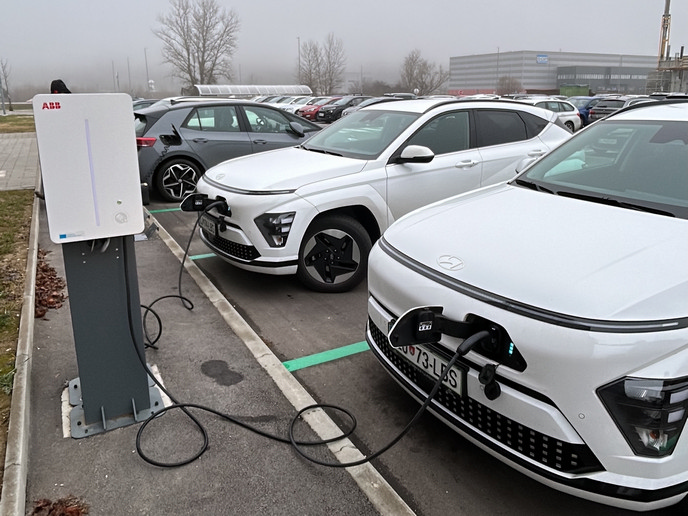
In the first half of 2026, electric vehicle (EV) car sales across Europe rose by 35.1 %(opens in new window), representing growth of more than 10 % compared to the previous year. The EVs currently on our roads are saving the EU around EUR 4.5 billion annually(opens in new window) in fossil fuel imports, leading to significant environmental gains. The EU-funded EV4EU(opens in new window) project centred its efforts on vehicle-to-everything (V2X(opens in new window) solutions): V2X enables more seamless EV connectivity, encouraging faster adoption.
Empowering users through EV flexibility
The EV4EU project developed and assessed several flexibility tools and services that can be integrated into EV systems, particularly within the context of V2X and considering the users’ perspective. “Beyond hardware and software, EV4EU provided key insights on user engagement, putting citizens at the centre of V2X management strategies,” emphasises project coordinator Hugo Morais. One of the project’s most important outputs was the design and successful testing of a fully functional bidirectional charging station prototype using standard combined charging system technology. It also built open-source tools for charging point operators that handle communications based on smart/bidirectional charging standards. Additionally, EV4EU explored a solution whereby a virtual power plant manages EV flexibility by optimising different resources and tapping into available energy markets. “This approach can increase revenue while delivering direct benefits to users,” says Morais. The activation of flexibility services through price signals was also tested and validated in real demonstrations; prices were defined based on grid conditions and the availability of renewable-based generation. Finally, EV4EU considered the issue of renewable energy curtailment by delivering services that would be activated during periods when it was expected to occur. “This coordination has the potential to significantly mitigate curtailment issues, increasing the use of renewable energy and, consequently, reducing CO2 emissions,” notes Morais.
Assessing the technical viability of smart charging across four EU pilot sites
The project successfully tested various flexibility solutions and management strategies in demonstrators across four EU countries. In Portugal, the team integrated unidirectional/bidirectional charging points with EVs across various settings, including residences and public buildings. The pilot achieved an average cost reduction of 14 % in household charging and an increase of up to 21.9 % in renewable energy source integration. In Slovenia, the team integrated virtual power plants and local market platforms across office and school buildings. It successfully tested flexible capacity across charging and discharging operations and demonstrated the added value of V2X over standard smart charging. Focusing on public charging environments and the impact of EVs on the grid, the Athens pilot validated the importance of dynamic pricing and flexible capacity contracts. This case study highlighted the significance of site accessibility, streamlined licensing and robust business incentives. The Danish pilot focused on managing parking lot charging clusters, particularly where local renewable generation is available. Via distributed control algorithms, it reduced three-phase power imbalances, maximising local renewable utilisation and reducing costs and fossil fuel use.
Mass EV adoption: unlocking synergies
Underpinning the project’s actions was the philosophy that a successful green transition in European transport hinges on effective stakeholder coordination. To that end, EV4EU co-founded the V2X Cluster(opens in new window) with four more related EU-funded projects, eventually expanding to include an additional four. The V2X Cluster remains active, sharing insights and initiating actions that contribute to the advancement of V2X technologies. In this way, it brings the EU one step closer to its vision of a smarter and greener mobility ecosystem.