Reusable packaging that meets consumer needs

Cutting out single-use packaging is one way we can all help to reduce greenhouse gas emissions, water usage and resource consumption. However, the overall share of reusable packaging remains low – in 2023, almost 80 million tonnes(opens in new window) of packaging waste were generated in the EU. Key barriers to scaling up reuse include consumer acceptance and behaviour, concerns about product contamination and supply chain logistical challenges. “Technical challenges also include developing packaging that can withstand repeated use, washing and, in some applications, demanding operating conditions,” says BUDDIE-PACK(opens in new window) project coordinator Florence Isnard from the Industrial Technical Center for Plastics and Composites(opens in new window) (IPC) in France. “Some solutions required significant optimisation before deployment, particularly for catering and fresh meat applications. Environmental and economic benefits are achievable, but only when sufficient reuse rates, return rates and operational efficiency are reached.”
Systemic approach to reusable packaging
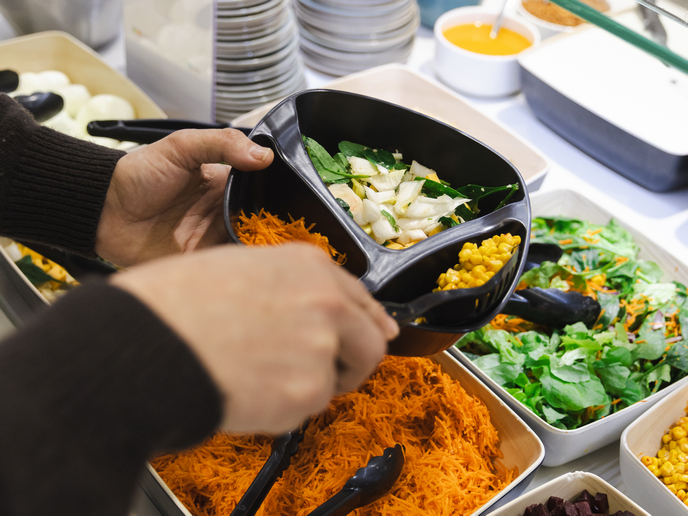
The EU-funded BUDDIE-PACK project sought to address these challenges by adopting a systemic approach covering the entire value chain. The project combined packaging design, material development, consumer behaviour research, safety assessment, business modelling and large-scale demonstrations. “We first developed design rules and material solutions for reusable packaging, then validated their durability, safety and recyclability,” explains Isnard. “We developed reusable packaging prototypes, optimised industrial washing protocols, and assessed chemical and microbiological safety.” In parallel, the team studied consumer perceptions and business requirements. “This enabled us to identify not only technical solutions but also the economic, social and operational conditions needed for successful deployment,” adds Isnard. Finally, several large-scale demonstration pilots were carried out in catering, take-away food services, supermarket meal packaging and refill applications. The results were assessed using environmental, economic and social impact methodologies to determine under which conditions reuse systems outperform single-use alternatives.
Deploying successful reusable packaging systems
Through these business cases, the project demonstrated that reusable packaging can be technically feasible, safe and recyclable. “We achieved return rates as high as 99.2 % in the reusable tray for a take-away food pilot, and demonstrated the feasibility of industrial washing and reuse loops,” notes Isnard. BUDDIE-PACK furthermore delivered design guidelines, consumer guidance, business model recommendations and policy recommendations to support future European standards. “By providing evidence-based data on performance, safety, economics and environmental impacts, BUDDIE-PACK can help companies and policymakers make informed decisions on where and how reusable packaging systems can be successfully deployed,” remarks Isnard. “The project also showed that reusable systems need to be assessed on a case-by-case basis – environmental and economic benefits are not automatic but depend on factors such as durability, washing efficiency, logistics and return rates.”
Scaling up promising reuse systems
Next steps include scaling up the most promising reuse systems and validating them under additional market conditions. Further work is also needed to optimise return systems, washing operations, consumer engagement strategies and economic performance, the factors that the project identified as decisive for successful deployment. “Our hope is that BUDDIE-PACK will contribute to a realistic and evidence-based transition towards reusable packaging in Europe,” says Isnard. “Rather than promoting reuse as a universal solution, the project helps identify where reuse delivers the greatest environmental, economic and social benefits, and under which conditions.” Over the long term, notes Isnard, the project’s results will help companies and policymakers to develop reusable packaging systems that are practical for consumers, economically viable for businesses and aligned with European circular economy objectives.