Sensor technology to tackle marine oil spills

Oil spills and chemical discharges at sea are often detected only after a slick is visible or after damage has occurred. “Existing tools such as radar, infrared and visual surveillance can show that something is on the water,” explains OWL(opens in new window) project coordinator Christian Testman from Ocean Visuals(opens in new window) in Norway. “They cannot reliably say what it is or how concentrated it is, and they struggle with thin films, dissolved oil and low concentrations.” There is therefore a clear need for continuous, objective monitoring, capable of identifying pollution in real time. This would enable effective responses in minutes instead of days and enable those responsible to be held accountable. Achieving this was the overall goal of the OWL project, which was supported by the European Innovation Council(opens in new window).
Advancing patented lidar technology
The project sought to apply patented hyperspectral laser-induced fluorescence (HLIF) lidar technology to a full family of sensors for vessels, offshore installations, drones and aircraft. Lidar is an active remote sensing technology that measures distances using pulsed laser light. Each sensor is designed to detect, quantify and classify oil and other organic pollutants remotely and in real time, with the system ready for industrial-scale deployment. OWL sensors use an ultraviolet laser to make substances in or on the water fluorescent. They then read the returning light across 1 000 to 2 000 spectral channels. “Each type of oil and organic substance has its own spectral ‘fingerprint’,” explains Testman. “Matching it against a reference library lets us identify the pollutant type (for example light, medium or heavy crude, diesel or bunker fuel) and estimate concentration down to parts per billion.”
Mounting sensors aboard ships
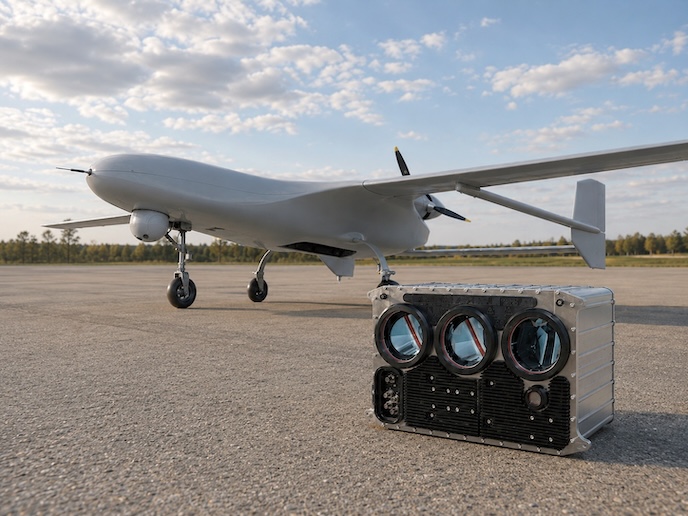
The product line of sensors developed includes SEA OWL for vessels and installations, as well as ELF OWL for drones, AIR OWL for aircraft and OWL MAP for situational awareness. During the EU-funded project, the SEA OWL sensor was tested in real operational conditions, aboard the Norwegian coastal administration’s oil combat vessels. A reference library was also developed to enable real-time oil-type classification. “We then mounted the sensors aboard the Norwegian coastal cruise liner Hurtigruten for continuous monitoring along the Norwegian coastline,” says Testman. “A SEA OWL was run on a Petrobras oil spill response vessel in Brazil’s Campos and Santos Basins.” On a seismic survey vessel offshore Suriname, the system took over 136 000 measurements in three weeks and mapped natural seeps. “The ship’s crew operated it alone and we maintained it remotely,” notes Testman.
Advancing the market readiness of sensors
The project succeeded in advancing the market readiness of the sensors. European and American patents have been granted, with protection to 2034. The company already has customers including Petrobras and OceanPact in Brazil. “We are currently in discussion with more than 50 commercial operators, ports and government agencies,” adds Testman. The company is also closing in on further funding, with the European Investment Bank(opens in new window) committed. “These funds will support service centres in the United States, Brazil, Africa and the Gulf region,” says Testman. “The idea is that operators, ports and coastguards get continuous pollution data without having to own and run the hardware. Our next sensor, SUB OWL, will extend monitoring below the surface.”