New technologies allow for cleaner water

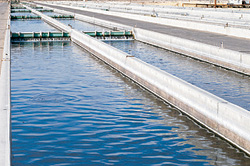
THE EU's SEWING project set out to design and build working prototypes of flexible and reliable microsystems used for the monitoring of water pollution levels. This new approach allows for pollution monitoring to take place in real time and not within a laboratory setting. SEWING partners based their work on the utilisation of Ion Selective Field Effect Transistors (ISFET) as sensors for specific polluting ions. The adaptation of ISFETs to polluting ion detection requires the use of ion-selective membranes. These modified sensors are termed CHEMFETs. These next-generation ISFETs formed the basis for a series of new prototypes aimed at detecting a variety of non-organic polluting ions, without being limited by temperature and other parameters. One of these prototypes is the LFA test unit that uses the Loop Flow Reactor (LFR) technology. The LFA test unit can be programmed to any configuration parameter and it includes measurements from two CHEMFET sensors. It is typically used to measure NO3 and NH4 levels. Project researchers also designed and built, what was termed, a Probe Demonstrator. It was designed specifically to be used in water as a probe and its novel technology has resulted in an extremely compact analytical reactor volume of 5ml volume. Italian-based Systea, developed these prototypes and is keen to secure further funding towards expanding this technology and gaining a favourable position within the international market. The company is also interested in potentially collaborating with third parties to achieve speedier and more effective market penetration.