Innovative technique promises efficient treatment of agro-industrial wastewaters

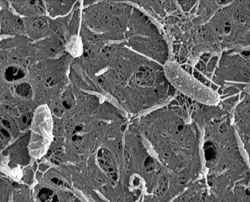
The anaerobic digestion process has been successfully used for the treatment of wastewaters from agro-industries, offering the possibility of efficient treatment with low operational costs. Its success could be attributed to an efficient uncoupling of solids retention time (SRT) from the hydraulic retention time (HRT) through biomass immobilisation either with biofilms or granules formation. In anaerobic membrane bioreactors (AnMBR) biomass is physically retained inside the reactor, along with specific microorganisms, allowing its degradation. The water that permeates is free of solids or cells and in comparison with other sludge bed technologies; therefore, it requires less post-treatment steps before it can be reused. The effective application of AnMBR technology is mainly restricted by the costs associated with the membranes and significant advances are being made in their performance. Aiming to identify configurations and operational procedures that will further minimise fouling and energy consumption, research at the Wageningen University in the Netherlands focused on reactors operating under mesophilic (30ºC) and thermophilic (50ºC) conditions. The feasibility of membrane bioreactors for the treatment of wastewaters that contain large amounts of suspended solids was evaluated considering both the membrane's performance and biological conversion capacity. The prototype reactors, each of 3.7l useful volume, were equipped with submerged polysulphone micro-filtration membranes. Under thermophilic conditions, high loading rates were attained with optimal removal levels, and no irreversible fouling was detected during operation. For long-term operation without membrane maintenance or physical cleaning, improved control of the shear forces over the membrane's surface would be required in order to reduce particle deposition, and increase critical and operational fluxes. The research team sees the possibility of using external membranes in the future as an interesting alternative, since the hydraulic behaviour of the reactor could be better controlled.