Understanding the effect of radiation

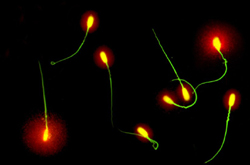
Little is known about the mechanisms behind radiation-induced carcinogenesis and the effect of radiation on cellular status. The TELOSENS project sought to define genetic factors that might play a role in the process. Telomeres were thought to account for at least some of the cellular responses to radiation. Project partners investigated whether telomere differences among different individuals leads to differential responses to radiation, and hence different tolerance levels. One of the methods developed was to measure the degree of sperm DNA fragmentation. Ionising radiation exposure increases the frequency of spermatozoa with fragmented DNA, even for several months after the exposure. An innovative procedure termed the Sperm chromatin dispersion (SCD) test has been used to determine sperm DNA fragmentation in human spermatozoa. The test is commercially available under the Halosperm trade name. The SCD test could become the routine approach in trying to determine radiation-induced damage in human sperm, shown to have implications on fertility.