Inflamed artery tissue implicated in atherosclerosis

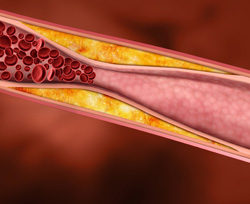
Efforts to treat cardiovascular diseases (CVDs) call for more information on the role that adventitia plays in activating and advancing atherosclerotic plaque. Adventitia, the outer covering of arteries made up mainly of connective tissue, is in part modulated by adipocyte activity. The EU-funded Adventitia project hypothesised that inflammation of the adventitia has a major effect on plaque progression and stability. If this process can be altered, a relevant therapeutic approach would be able to help plaque avoid rupture. The Adventitia team first assigned a major role to the longevity gene nicotinamide phosphoribosyltransferase (NAMPT) on plaque development and rupture. The NAMPT protein is found in the bloodstream and promotes amongst others smooth muscle cell maturation in blood vessels. Although there is still much to learn about its role in atherosclerosis, recent research has revealed elevated NAMPT serum levels, which correlate with obesity, in patients with inflammatory disorders. On the strength of this new knowledge, project partners aimed to highlight the role of NAMPT as a modulator in plaque progression and destabilisation. To achieve this objective, researchers generated low-density lipoprotein (LDL) receptor (LDLr-/-) chimeras, with NAMPT overexpression in circulating white blood cells. The LDLR gene is directly involved in the development of atherosclerosis, and its absence leads to accelerated lesion formation due to increased plasma levels of LDL, the primary carriers of cholesterol in blood. Study results demonstrated the significant effects of NAMPT overexpression on how monocytes differentiate to trigger an inflammatory response, blood cell survival and atherosclerosis. The project's achievements in this area point to the great potential this longevity gene has for therapeutic intervention in atherosclerosis and other inflammation-related disorders. Another target studied for its role on plaque development and rupture was the TGF family member macrophage inhibitory cytokine-1 (MIC-1 aka GDF15). Advanced plaques of MIC-/- chimeras revealed numerous features of improved plaque stability, identifying MIC as a causal risk factor for cardiovascular disease. The project succeeded in enhancing understanding of the critical role that adventitia plays in the development and stability of atherosclerotic plaque. Study results have the potential to lead to new targets and drive further research into treatment regimes for CVDs