



Making the right choice at the right time

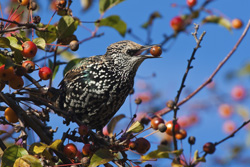
Extracting insights from evolutionary biology, economics, psychology and all related sciences, the 'Sequential encounters as the evolutionary drivers of choice mechanisms' (Seedcm) project focused on specific decision problems in birds. The specific target was to test whether starlings do actually take decisions by evaluating the options in front of them. In humans, knowing that each option is considered creates the perception that all decisions are as a result of rational evaluation of each option. Because birds do not verbalise their rationale, hypotheses about how they reach decisions has to be based on their behaviour. Previous research has shown that the European starlings take longer to make a solitary decision than when it is in a group of decisions in a choice situation. Interestingly, the time taken to come to a decision can be predicted from the time taken to decide on that option alone. Seedcm researchers developed a model, the sequential choice model (SCM) that proposes that the mechanisms in play are the same in both situations, whether faced individually or sequentially. In evolution, meeting options simultaneously is rare whereas encountering them sequentially is more common. If more than one option is present, then whichever reaches its own threshold first is acted upon. From project studies using multi-alternative environments, time-dependent preferences, risky choice and comparative valuation, SCM was extremely accurate in predicting choice from no choice situations and when two or three options were available simultaneously. Importantly, there was never a lengthening of decision time as would occur in conventional evaluation-based theories. Species have probably evolved to neglect the suboptimal consequences in rare simultaneous encounters. The project will continue to apply SCM across a wider range of protocols and species. Recently, the theory has been applied to chimpanzees and gorillas in collaboration with the Max Planck Institute. Seedcm results can be linked to adaptation and survival in the face of potential prey. The theory can also be used as a springboard to other species including humans.