Combating cerebral malaria

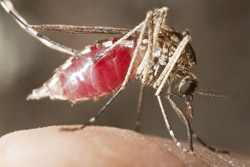
The aim of the 'Pathogenic role of microvesiculation in cerebral malaria' (MPCM) project was to discover the mechanisms behind MP production and, by preventing their production, develop therapies for treatment of cerebral complications of malaria. Mosquitoes transmit malaria whilst feeding by injecting the plasmodium parasite into the victim’s bloodstream. The disease can affect the brain and central nervous system (CNS), causing loss of consciousness, convulsions and death. Studies on laboratory mice and humans reveal that the production of MPs is greatly increased during CM. MPs are generated by the inflammatory reaction of the affected host; they circulate in the blood and promote clotting in the microvasculature. The initiative brought together teams from complementary fields including immunology, pathology, cell biology and genetics. Colleagues from Cameroon, India, Malawi and Tanzania, where malaria is extremely common, made a vital contribution to the research. Improved knowledge of MP production will lead to new therapies and better patient care and a reduction in the number deaths resulting from the evolution of uncomplicated malaria into CM.