Industry leaders and researchers join the fight against underwater noise


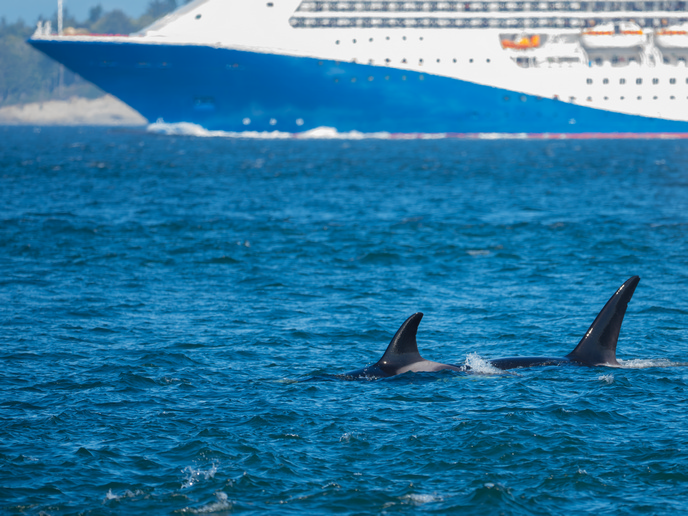
The EU-funded LOWNOISER(opens in new window) project was launched in January 2025 to help the maritime sector reduce underwater noise from shipping. In March 2026, partners from across Europe met up in Catania, Italy, to discuss the project and visit the Capo Passero deep sea monitoring site in the Mediterranean.
Taking stock
The two-day General Assembly was hosted by Italian project partner National Institute for Nuclear Physics at its National Laboratories of the South facility. The consortium gathered there to review progress, exchange knowledge and discuss subsequent steps to reduce underwater radiated noise from ships. As far as modes of transport go, shipping may be very energy efficient, but the underwater noise it generates can disrupt marine ecosystems, affecting marine animals’ ability to communicate, navigate and locate food. Combining modelling tools, experimental research, full-scale demonstrations and environmental analysis, LOWNOISER is working to reduce this noise without compromising ships’ efficiency and performance. On the first day of the meeting, the partners provided updates on modelling approaches, experimental methods and large-scale demonstrations to understand ship noise generation and its impact on the marine environment. The consortium is analysing key noise sources – machinery vibrations, hydrodynamic effects, structural transmission and propeller cavitation – and employing analytical models, simulations and measurements to improve noise prediction and monitoring. These insights will drive quieter ship designs, retrofit solutions and operational strategies to mitigate underwater noise. “We have partners covering the entire chain — from advanced modelling and measurement methods to laboratory experiments and real-world demonstrations,” states Emilie Dorgeville of LOWNOISER coordinator Maritime CleanTech, Norway, in an article(opens in new window) posted on the project website. “Bringing this knowledge together allows us not only to better understand underwater noise from ships, but also to develop practical solutions and provide guidance for future regulations.” The team has now been further strengthened with the addition of Havila Voyages, Norway, which recently joined LOWNOISER as an associated partner. The company will allow its vessel MS Havila Capella – which sails the Norwegian Coastal Route between Bergen and Kirkenes – to be fitted with advanced sensors and hydrophones to measure underwater radiated noise and vibrations generated during normal vessel operations. “The future of maritime transport must be built on respect for the oceans we sail and the coastal communities we serve,” remarks Marianne Vågen Langeland, Chief Operating Officer at Havila Voyages, in another LOWNOISER news item(opens in new window). “By joining the LOWNOISER project and making our vessel Havila Capella available to full‑scale testing, we want to contribute to a shipping industry that is not only cleaner, but also quieter for marine life.”
A field visit
An added perk of the General Assembly was the opportunity to visit the Capo Passero deep sea research site. Partners inspected the Distributed Acoustic Sensing (DAS) station that uses submarine fibre-optic cables to monitor underwater sound. By transforming the cables into thousands of virtual acoustic sensors, DAS enables real-time, long-range detection of underwater vibrations. For LOWNOISER, this technology offers a powerful solution for monitoring ship noise and the ocean soundscape, providing critical data for scientific research and maritime environmental management. Project results will inform future guidelines, industry practices and regulatory frameworks to foster quieter, more environmentally responsible maritime operations. LOWNOISER (LOWering underwater NOISE Radiation from waterborne transport) ends in December 2028. For more information, please see: LOWNOISER project website(opens in new window)