


Trending Science: And the world’s oldest footprints just discovered belong to…?

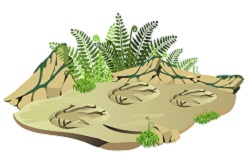
An international team of researchers discovered fossil tracks in China that date back to the Ediacaran Period, just before the Cambrian explosion about 541 million years ago when life on Earth began to flourish. The findings were published in the journal ‘Science Advances’(opens in new window). The place where an animal first laid a footprint The team analysed tracks and burrows in the Dengying Formation near southern China’s Yangtze Gorges. The trackways represent the earliest discovered sign of when animals evolved appendages. Shuhai Xiao, a geobiologist at Virginia Tech University in the United States, told the British newspaper ‘The Guardian’(opens in new window): “Animals use their appendages to move around, to build their homes, to fight, to feed, and sometimes to help mate. It is important to know when the first appendages appeared, and in what animals, because this can tell us when and how animals began to change to the Earth in a particular way.” He said that the tracks, which are only a few millimetres in width, had to be spotted by tilting rock slabs at different angles. “The key challenge is to get the lighting right so that the fossils stand out against the background, because the fossils have very low relief,” added Xiao. Animals with bilaterally paired appendages are thought to have appeared during the Cambrian explosion. This is the period when things like heads, tails and legs began to emerge. The study suggests that their origin may be traceable to even further back in time, some 10 million years before. Prior to these findings, no evidence of limbed animals had been discovered that predated the Cambrian explosion. How did they know the impressions were footprints? “If an animal makes footprints, the footprints are depressions on the sediment surface, and the depressions are filled with sediments from the overlying layer,” explained Xiao in the UK’s ‘Independent’(opens in new window). He went on to say: “This style of preservation is distinct from other types of trace fossils, for example, tunnels or burrows, or body fossils. The footprints are organised in two parallel rows, as expected if they were made by animals with paired appendages. Also, they are organised in repeated groups, as expected if the animal had multiple paired appendages.” Do the tracks belong to a bug? According to the researchers, the tracks were left by a primitive ancestor of present-day insects or worms. However, what the creature looked like exactly remains a mystery. That’s because nothing this old with legs had been discovered until now. In the end, the study doesn’t provide enough information to determine what kind of animal the footprints belonged to. No body fossils for these animals have been found yet either. The team believes such remnants may not have been preserved. Nevertheless, it’s one small step for a creepy crawly fossilised creature, one giant leap for our understanding of evolutionary history.
Countries
United States