


Commission outlines first integrated strategy for research and innovation
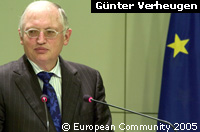
The Commission adopted a new Action Plan on 12 October, setting out for the first time a fully integrated approach to EU research and innovation policies, in line with the updated Lisbon partnership for growth and jobs. The Commission's motivation for producing the Action Plan is the 'worrying' stagnation of research and development (R&D) intensity in Europe, particularly within the private sector. The actions proposed in the document are therefore specifically designed to improve the conditions for business investment in R&D and innovation. Launching the Action Plan, Commission Vice-President with responsibility for Enterprise and Industry, Günter Verheugen, said: 'Despite past promises, R&D investment is stagnating in Europe, particularly on the business side. We need to face facts: there are too few innovative firms in Europe, and the willingness to create new firms is still too low. The Commission is firmly resolved to improve the situation [...] and for the first time this Action Plan sets out what both the EU and the Member States can do to improve research and innovation. 'New initiatives in the Action Plan include a revised State Aid policy to support research and innovation, tax incentives for firms to invest more in innovative areas, creating an attractive single market for researchers, Structural, Cohesion and regional funding more focussed towards research and innovation, and financial instruments to support research within small and medium sized enterprises,' he added. Mr Verheugen underlined the responsibility on national governments to address this challenge by adding: '[T]he best strategy is not worth much if Member States do not chip in the money to realise it. Every cent which goes into innovation and research is a cent invested in jobs, growth and hence our future.' The Action Plan will work alongside the National Reform Programmes currently being prepared by EU Member States, which the Commission has insisted should place a priority on innovation. The integrated strategy outlines 19 separate actions structured around four themes: research and innovation (R&I) at the heart of EU policies, R&I at the heart of EU funding, R&I at the heart of business, and improved R&I policies. Some of the actions build on previous EU activities, but many are new initiatives. In order to put R&I at the heart of EU policy, the Action Plan proposes establishing a dialogue with stakeholders to identify regulatory barriers to research and innovation. This will be supported by improved analysis of innovation policy and practice provided by the Commission's new Europe INNOVA initiative. The EU will also promote the use of public procurement to stimulate research and innovation, and define EU guidelines on the optimal use of R&D tax credits. For their part, the Member States are encouraged to implement Community legislation and initiatives in a way that will best promote research and innovation in their national contexts. Logically, the Commission aims to place R&I at the heart of EU funding by reorienting its largest funding instruments towards the promotion such activities. In turn, the Member States are invited to adopt the Commission's proposals on the Cohesion and Structural funds, and take full advantage of the opportunities offered by the rural development fund to boost R&I. The onus will also be on national governments to put in practice Commission plans to mobilise national and regional research and innovation programmes, with the support of Community schemes to foster transnational cooperation. The Action Plan outlines a number of initiatives to embed R&I practices at the heart of business, for example through guidelines to improve collaboration between public research and industry, the creation of innovation poles and industrial clusters, the provision of R&I support services to businesses, and the promotion of good innovation practices. Again EU countries are urged to implement future EU recommendations in this area, making full use of the available Community funding instruments. Finally, to improve R&I governance in Europe, the Commission will monitor and support national policy developments through the Lisbon partnership for Growth and Jobs, whilst also developing new policy analysis instruments and supporting policy learning platforms and transnational policy cooperation. The Member States should take advantage of the opportunities offered by these EU level initiatives, and report on their own policy developments through their National Reform Programmes. 'The Action Plan outlines what we should be doing at EU and Member States level, and how best to monitor these activities,' said Science and Research Commissioner Janez Potocnik, who presented the document alongside Vice-President Verheugen. 'Investing in knowledge is the best way for Europe to be competitive on the global stage and maintain its quality of life. Our proposals will help to get Europe back on the right track.'